

Force of Infection is now on the summer schedule, meaning national Outbreak Outlook updates are only available to paid subscribers. The winter schedule, including the free national version, will resume in October. To continue receiving reports during the summer, please upgrade to paid.
Influenza-like illness
Influenza-like illness (ILI) activity is exceptionally low, with just 0.9% of outpatient visits for fever and a cough or sore throat. This is lower than at the same point during any of the last six seasons. Typically, initial increases in ILI coincide with the start of the school year, but I haven't seen that yet. The flu season usually does not start in earnest until October or November.
Although flu shots are becoming available at local drugstores, I suggest holding off for now. Immunity tends to wane after several months, so it is better to time your shot closer to the start of the season. I aim for October.
Activity is low across all age groups. As always, children ages 0-4 have the highest rate at 3.1%, followed by the 5-24 group at 1.2%. School-age kids typically show increases first, so I'll be watching that group closely in the weeks ahead. All adult age groups remain well below 1%.
Severe illness is extremely low.
Covid-19
We are currently in the summer Covid-19 season. While all metrics are rising, overall activity remains low to moderate across most of the country. (You can listen to me talk about the season so far on NPR, if that is of interest.)
National Trend
At the national level, Covid-19 test positivity is rising and currently stands at 3.7%. This is much lower than the 10.9% positivity rate reported at the same point last year. Although widespread home testing makes positivity rates harder to interpret than during the early days of the pandemic, I still find it a useful leading indicator.
Emergency department (ED) visits for Covid-19 are stable at 0.3%, well below the 1.5% to 2% range seen last August. Infants and children aged 1 to 4 are the most affected, accounting for 1% to 1.5% of visits. In contrast, ED visits for adults, including older adults, remain below 0.5%. However, adults aged 65 and older continue to have the highest rates of hospitalization, which measures more severe illness.
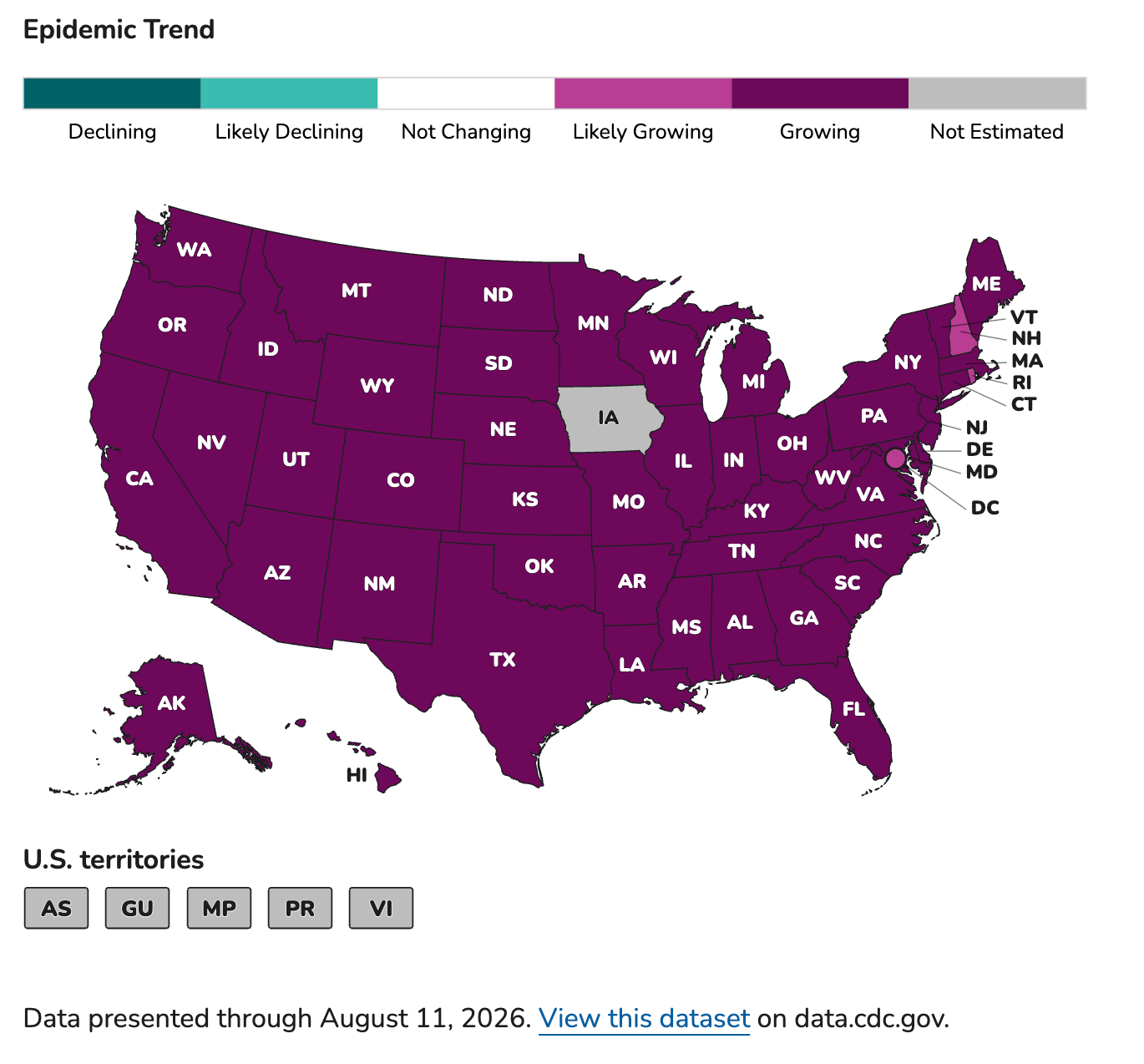
The CDC’s Center for Forecasting and Outbreak Analytics estimates that Covid-19 activity is growing in every state with available data. However, the pace of increase is somewhat slower than in previous summer waves, which is an encouraging sign that we may have a lighter season.
South
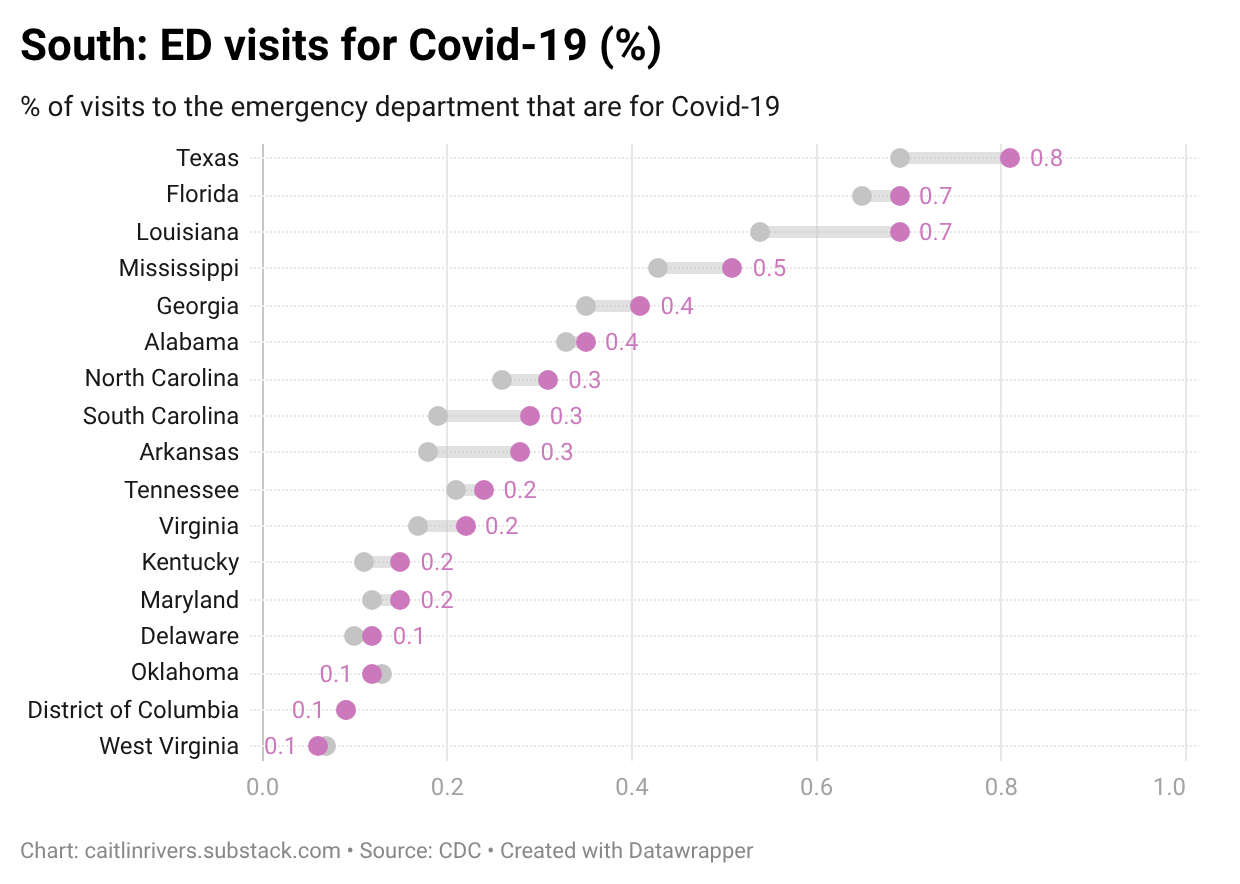
The South remains the most affected region. Texas leads with 0.8% of emergency department visits attributed to Covid-19, followed by Florida and Louisiana at 0.7%. Other states in the region report rates at or below 0.5%, though all states are seeing increases. Wastewater concentrations are also rising throughout the region, with Gulf states in the low to moderate categories and other Southern states showing very low concentrations.
West
In the West, activity has been edging up for several weeks, tying the region with the South for ED visit rates. Hawaii is the most affected state in the West, with ED visits rising to 0.9% from 0.7% the previous week; other Western states remain below 0.5%. Wastewater concentrations are also increasing across the region, again led by Hawaii.
Northeast and Midwest
The Northeast and Midwest remain in good shape. Although activity is rising in both regions, overall metrics are low, with ED visits below 0.2% across all states. Wastewater concentrations in both regions also remain low.
RSV
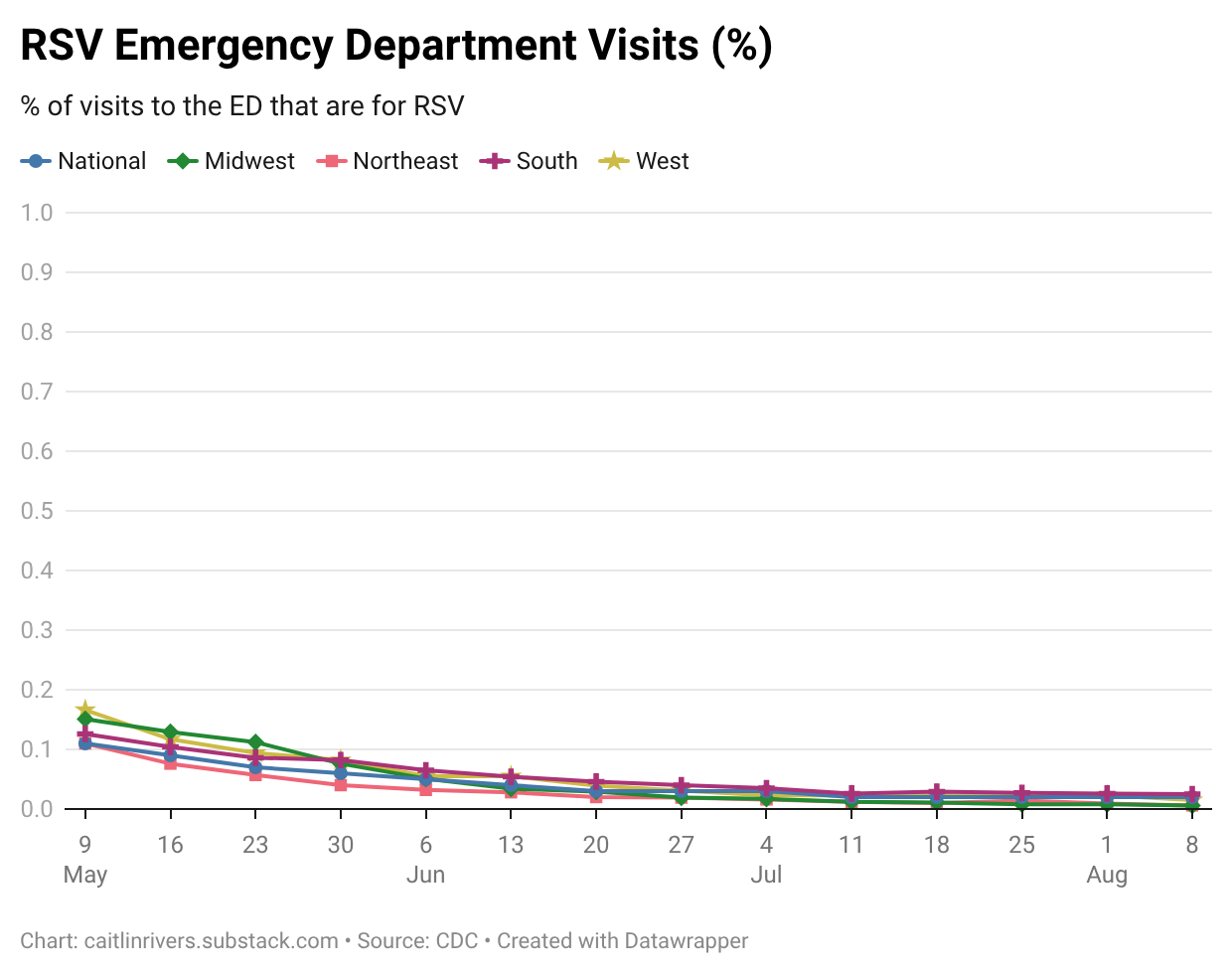
RSV activity remains very low and stable. Last year, activity began to increase in mid- to late September; if that pattern repeats, activity should remain low for another month. RSV poses the greatest risk of severe illness to infants, young children, and older adults.
Stomach Bugs
There is no new norovirus data this week. Based on previous reports and seasonal trends, activity is likely low to moderate and expected to increase as the school year starts. Similarly, rotavirus activity remains low and stable.
Food Recalls
The following foods are being recalled because they are contaminated and can pose a health risk to you and your family. Please check your cupboards and discard any of these items:
New:
- Tomato Bisque Soup Kit (more info)
- Oma’s Pride Dog Food (more info)
- NatureBest Products Containing Jalapeños sold at H-E-B (more info)
- Whole Foods Market Select Salsas, Guacamole, Pico de Gallo, and Prepared Foods Products (more info)
- Vitasia Chinese Style Wok Spice Mix sold at Lidl (more info)
- Trader Joe’s Products Made with Jalapeño Peppers (more info)
- City Foods Ready-To-Eat Pastrami and Corned Beef Products (more info)
Previously Reported:
- Green Powder Products, Food to Live, potential Salmonella contamination (more info)
- Fresh jalapeño peppers from Sinaloa, Mexico, potential Salmonella outbreak (more info)
- Pistachio Nut Butter, Bettergoods, potential Salmonella contamination (more info)
- GreenWise frozen blueberries and mixed berries, E. coli contamination (more info)
- Midwest Poultry Services, White & Brown eggs, Salmonella Enteritidis (more info)
In Other News
Cyclosporiasis outbreak investigation. New details on the cyclosporiasis outbreak are emerging. This week, it was reported that FDA officials are visiting the farm linked to Cyclospora contamination in iceberg lettuce to conduct an on-site investigation. CBS News reports that the farm had not been inspected in seven years. This is not unusual given staffing and funding challenges that limit the number of on-site inspections FDA inspectors can conduct.
Nearly 14,000 laboratory-confirmed cases have been reported across 47 states, with another 10,000 cases under investigation. Not all are linked to the iceberg lettuce outbreak, suggesting other contaminated food products may be involved. Investigations are ongoing to identify other sources.
Meanwhile, jalapeños from Taylor Farms have been linked to a new Salmonella outbreak. The affected peppers were distributed to Qdoba, Whole Foods, and Chipotle for use in salsas, guacamole, and other prepared items. Separately, contamination of shell eggs in the South has sickened at least 98 people and resulted in a recall of 1.6m cartons.
Locally acquired dengue. Vector-borne illness season is in full swing, with two states reporting autochthonous (locally acquired) cases of dengue fever. Florida has reported ten local cases (eight in Hillsborough County and two in Pinellas County), and one case was reported in Northern Virginia. Dengue is a viral infection transmitted to humans through mosquito bites, causing symptoms such as high fever, severe headache, muscle and joint pain, and a rash. While most U.S. cases occur in travelers returning from abroad, local transmission has increased in recent years. The main mosquito that transmits dengue (Aedes aegypti) is also responsible for other vector-borne diseases such as Zika, chikungunya, and yellow fever.