Flu season is off to its earliest start in years, and activity is very different from state to state.The regional editions cover what’s happening where you live, across flu, Covid-19, RSV and more. Try them free for 7 days, then get any or all four regions every week through the winter for $5 a month or $60 a year. Cancel online anytime. Learn more about regional editions.
Influenza activity continues to rise across the country, with the West and South both seeing substantial activity, especially compared with a typical October.
Test positivity continues to rise in the West, now near 10%. The region got a very early start to the season. The South is now well on its way, too, with nearly 5.5% test positivity. The other regions are in better shape, but increases are still evident. Outpatient influenza-like illness is ticking
Flu season is off to its earliest start in years, and activity is very different from state to state.The regional editions cover what’s happening where you live, across flu, Covid-19, RSV and more. Try them free for 7 days, then get any or all four regions every week through the winter for $5 a month or $60 a year. Cancel online anytime. Learn more about regional editions.
Influenza continues its early season surge with unseasonably high activity in the West and South. Although outpatient influenza-like illness (ILI) is still modest at 2.1% nationally, test positivity has doubled in the last three weeks, and in Region 9 (Arizona, California, Hawaii and Nevada) it now surpasses 10%.
New this week: the South is making a play to catch up to the West. Emergency department visits for influenza are 1.0% in both
Force of Infection will switch to the winter publication schedule on October 18. The national edition will be free for all subscribers. Paid subscribers can elect to receive regional editions, with detailed information about every state. Click here to learn more about regional editions.
Influenza activity continues to exceed what we typically see this time of year, specifically in the West. However, I now see signs that the South is also in play.
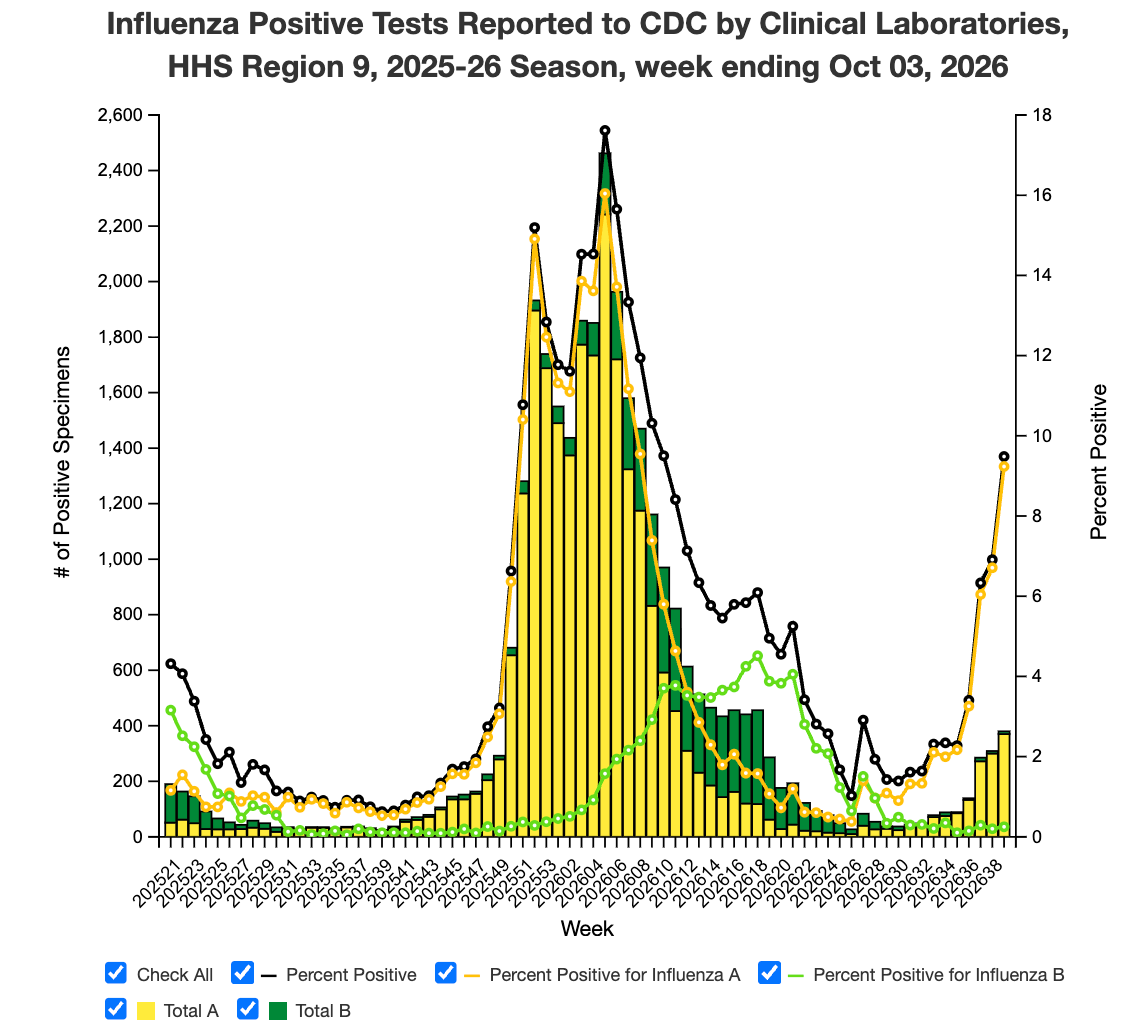
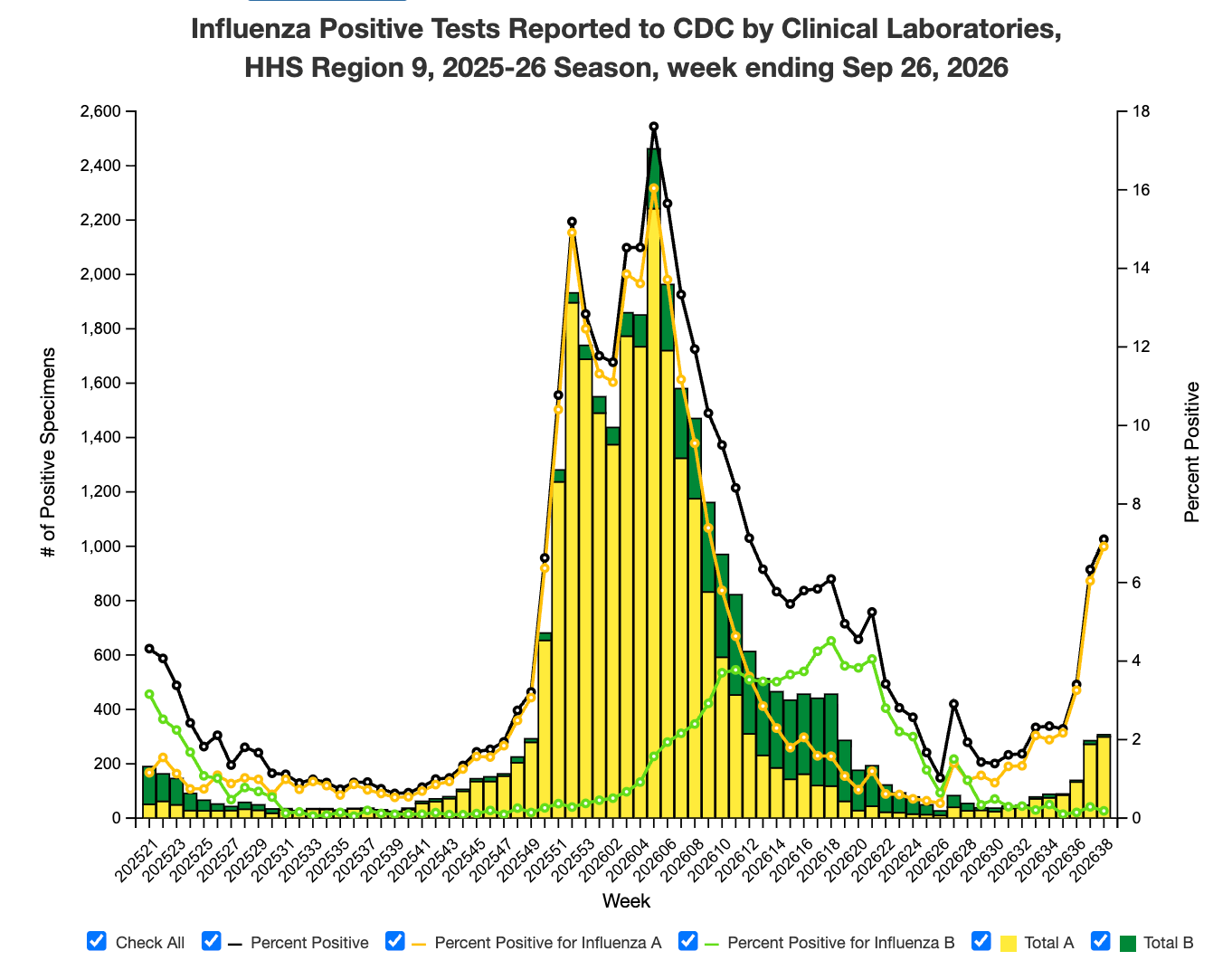
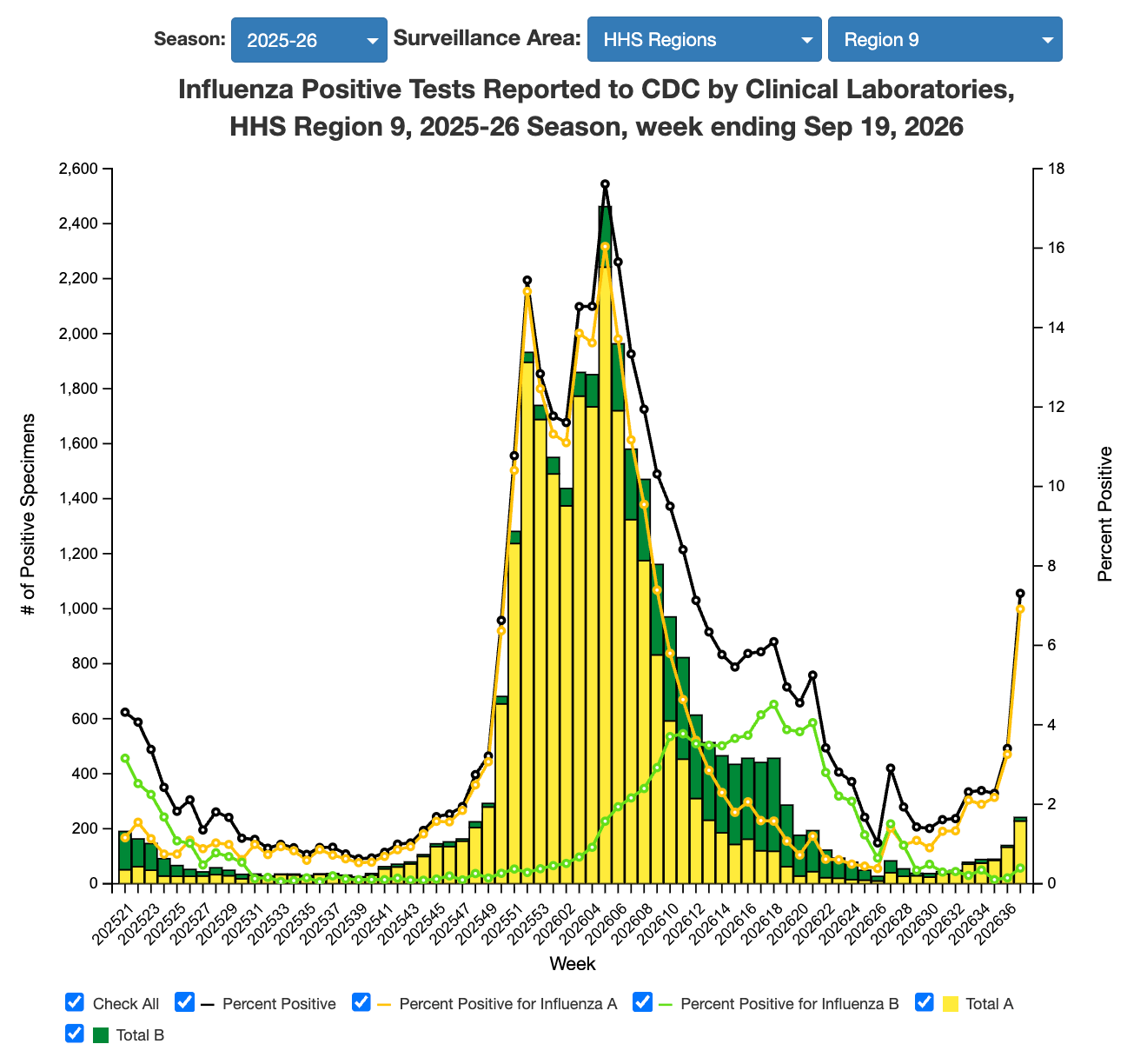
Most striking is test positivity for influenza. HHS Region 9, which includes Arizona, California, Hawaii, Nevada and the Pacific territories, is at 9.5%, up from around 7% the week prior and around 2% in late August. Nearly all of that is influenza A. For context, this region peaked at around 15% last winter, so we are already well on our way.
Influenza test positivity in HHS region 9. Source: CDC
Region 10, which includes Alaska, Idaho, Oregon and Washington, is also elevated at around 5%. That is down from between 6.5% the week prior, which is an interesting (and possibly spurious?) divergence from its Region 9 neighbor. I am also watching Region 4, which covers Alabama, Florida, Georgia, Kentucky, Mississippi, North Carolina, South Carolina and Tennessee. Test positivity there is still low at around 3%, but it more than doubled in a week. This is one of the signs that the South is now in play.
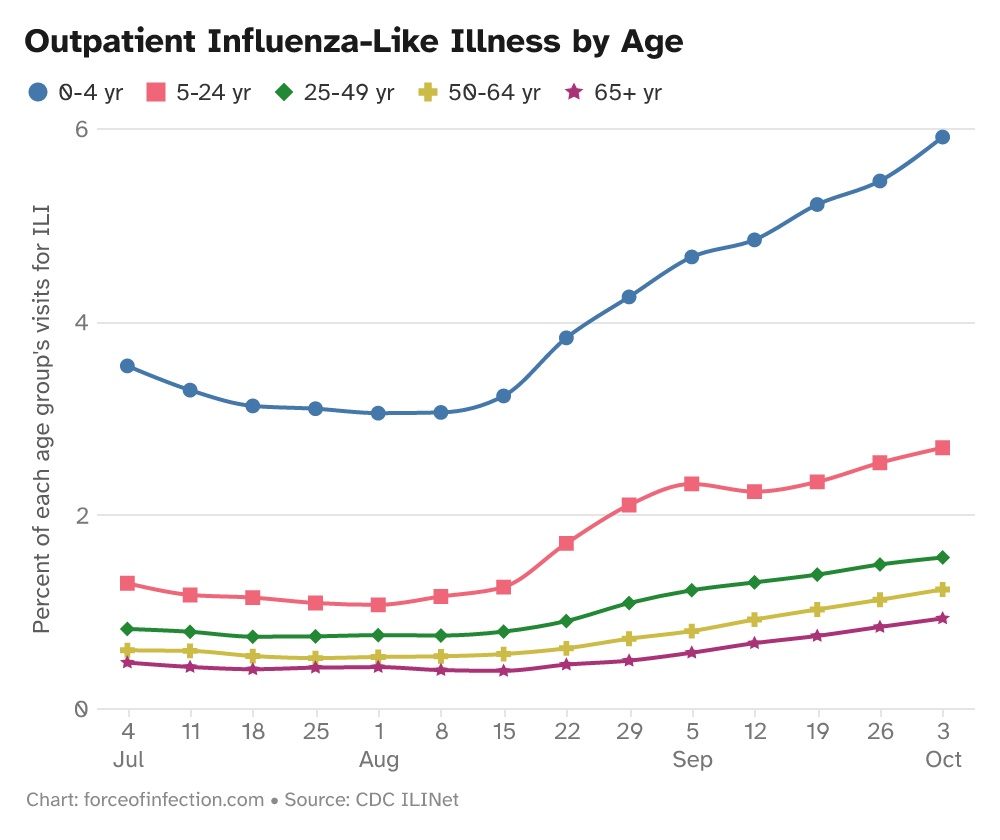
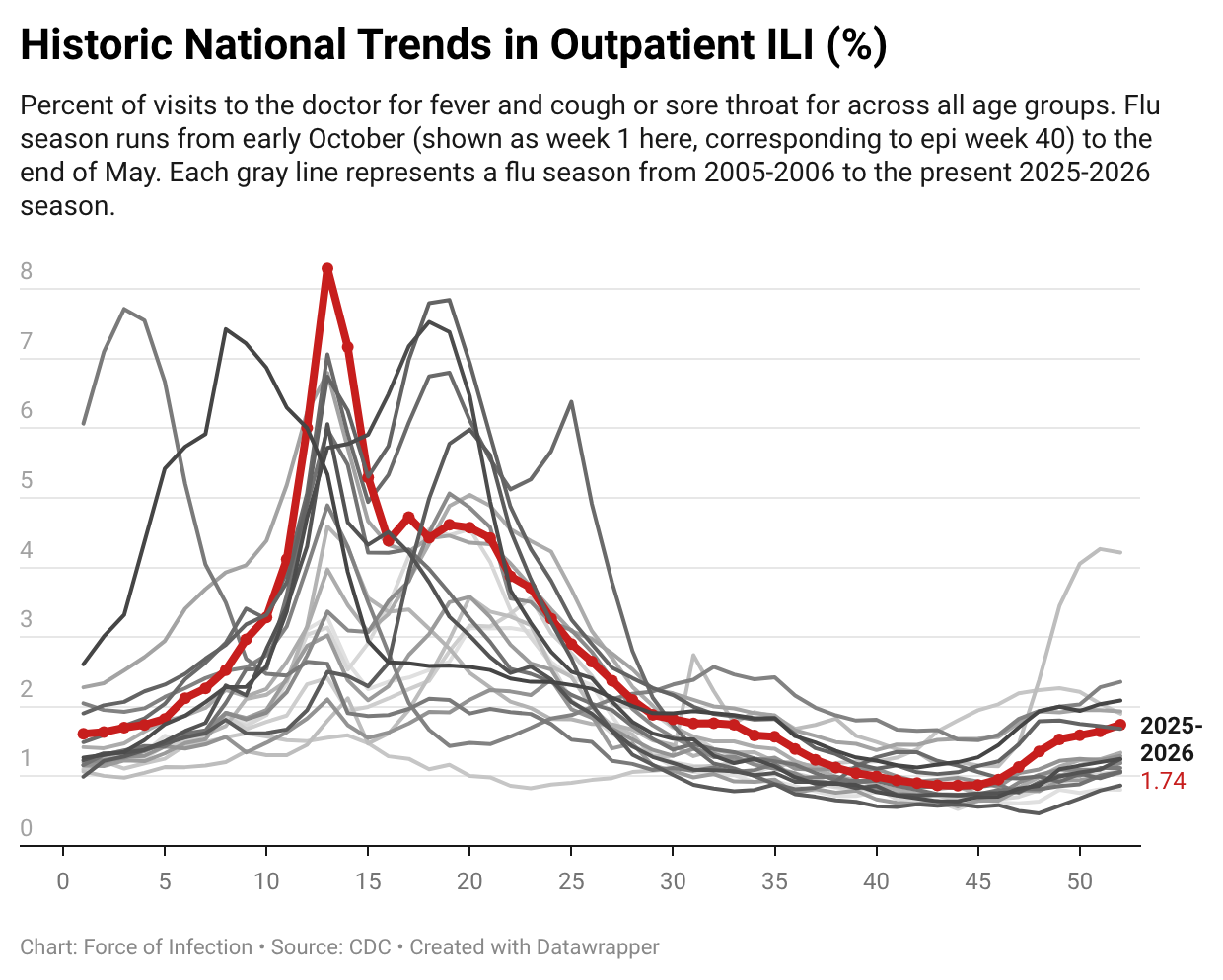
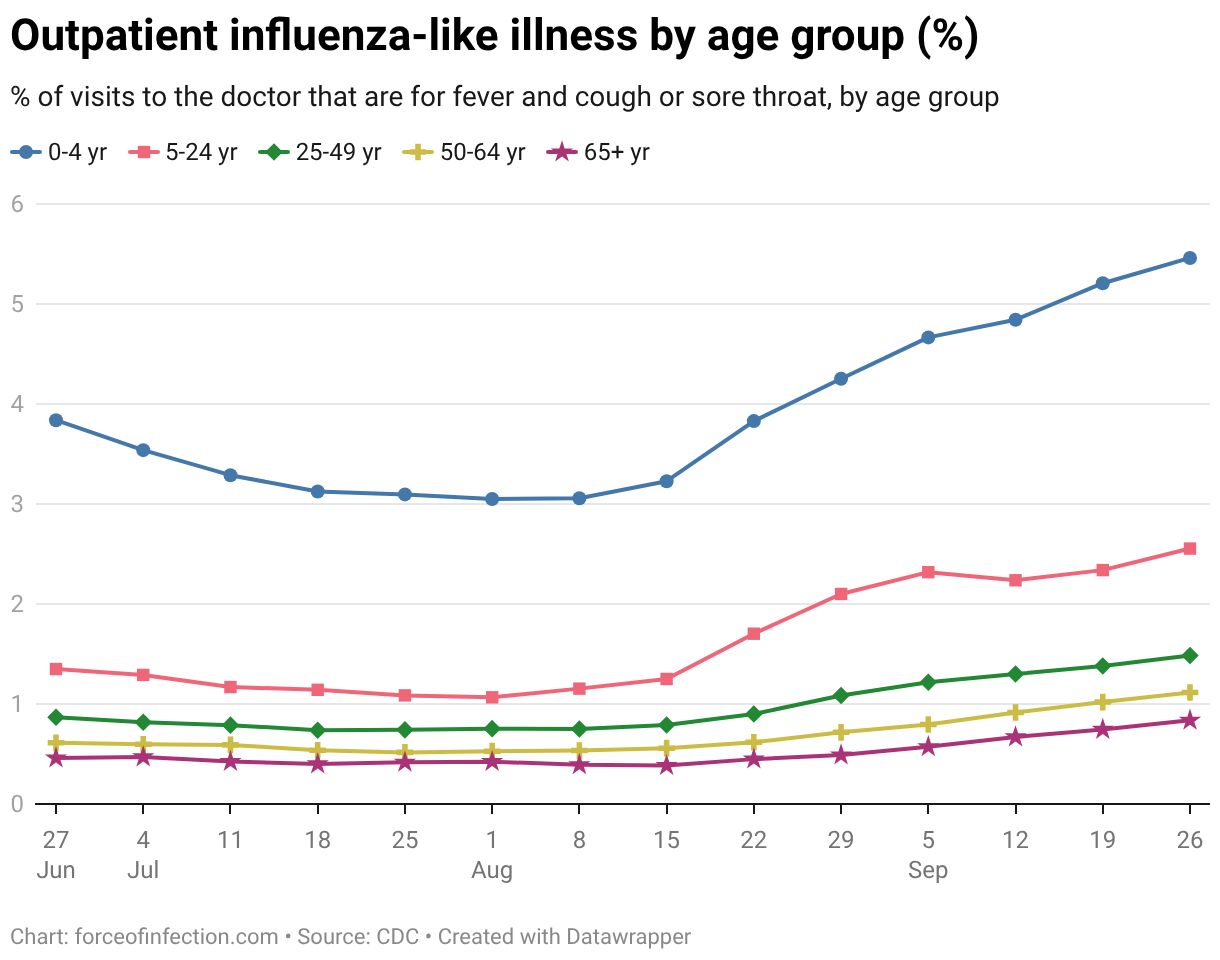
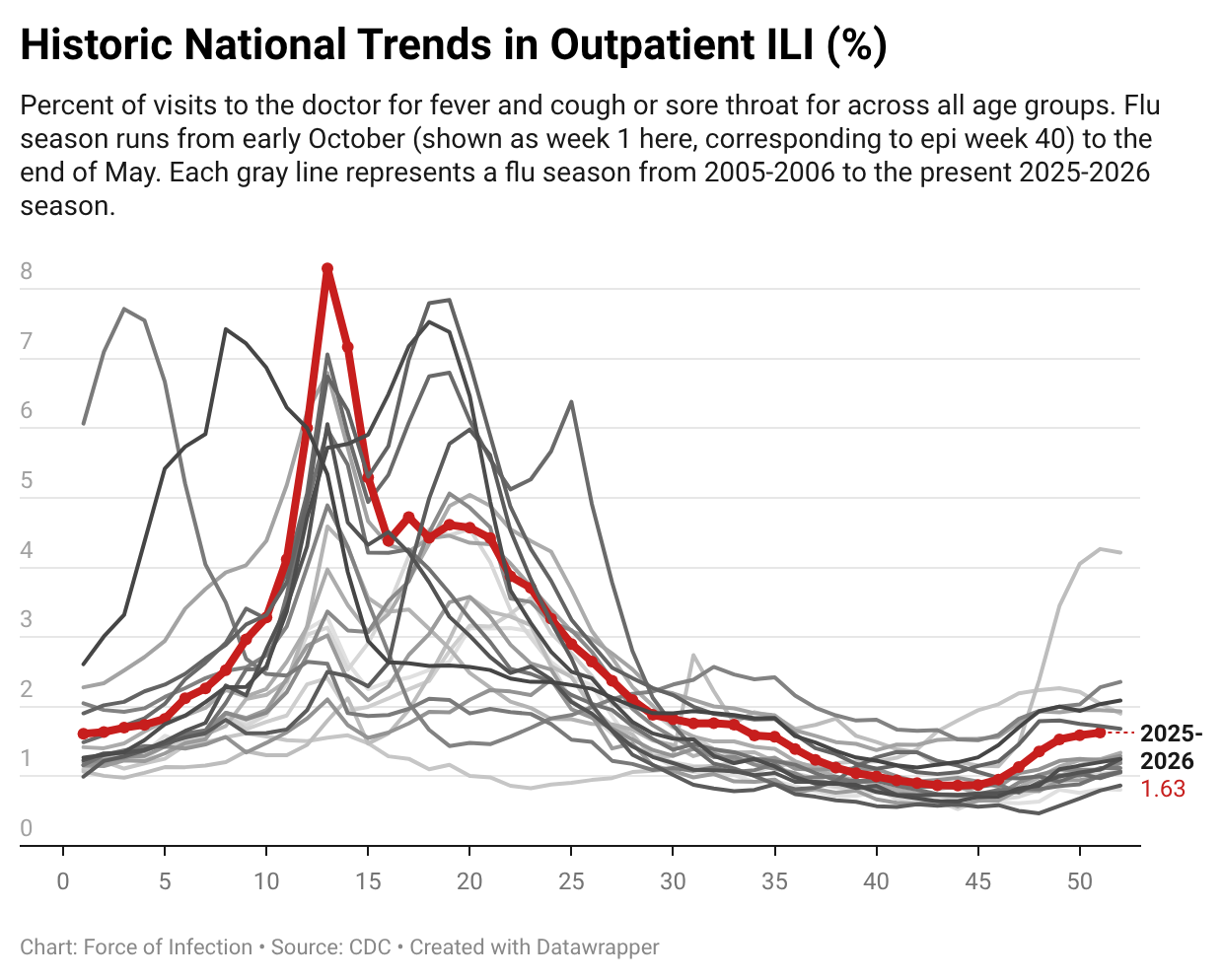
At a national level, outpatient influenza-like illness (ILI), which is the percentage of visits to the doctor that are for fever and cough or sore throat, increased from 1.7% to 1.8%. As usual, children ages 0-4 have the highest levels of outpatient ILI at 5.9%, up from 5.5% the week prior. Activity in people ages 5-24 is also rising, now at 2.7%. Older age groups are at 1.6% and below.
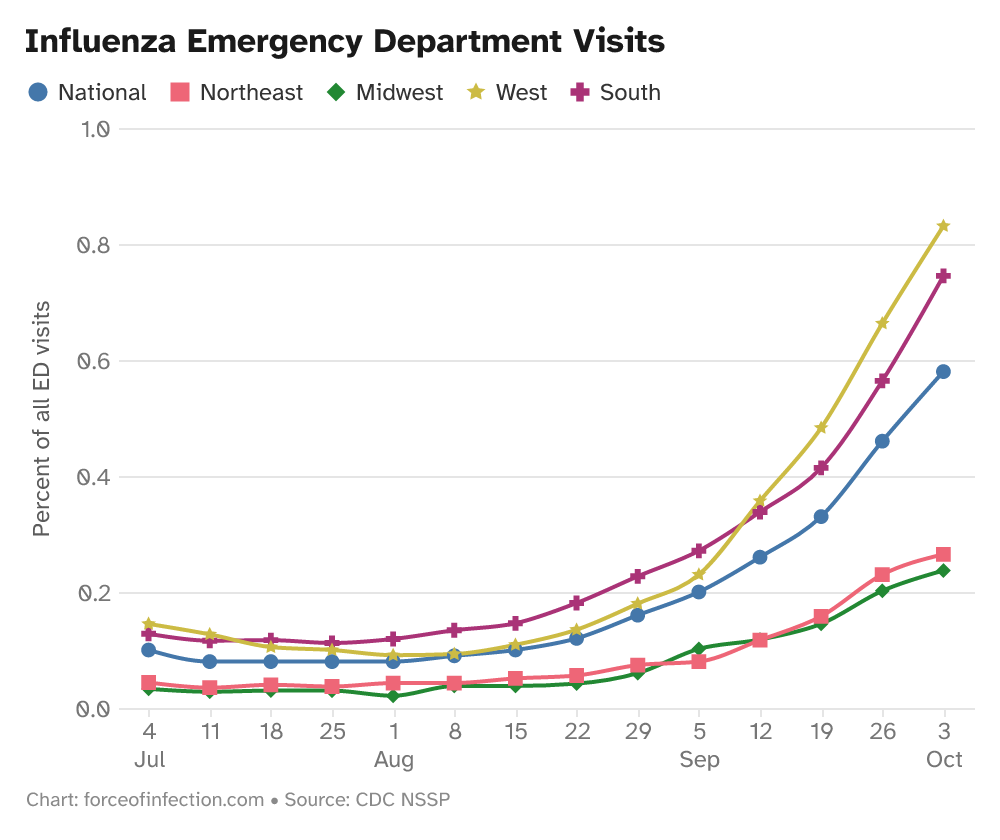
Emergency department visits for influenza are at 0.6%, a level last season did not reach until mid-November. Much of that is contributed by the Western region where ED visits are 0.8%. I want to call out Hawaii specifically, where emergency department visits for influenza are especially high at 4.8%. The South is also elevated at 0.7%. In contrast, activity in the Northeast and Midwest is low at 0.3% and 0.2%, respectively.
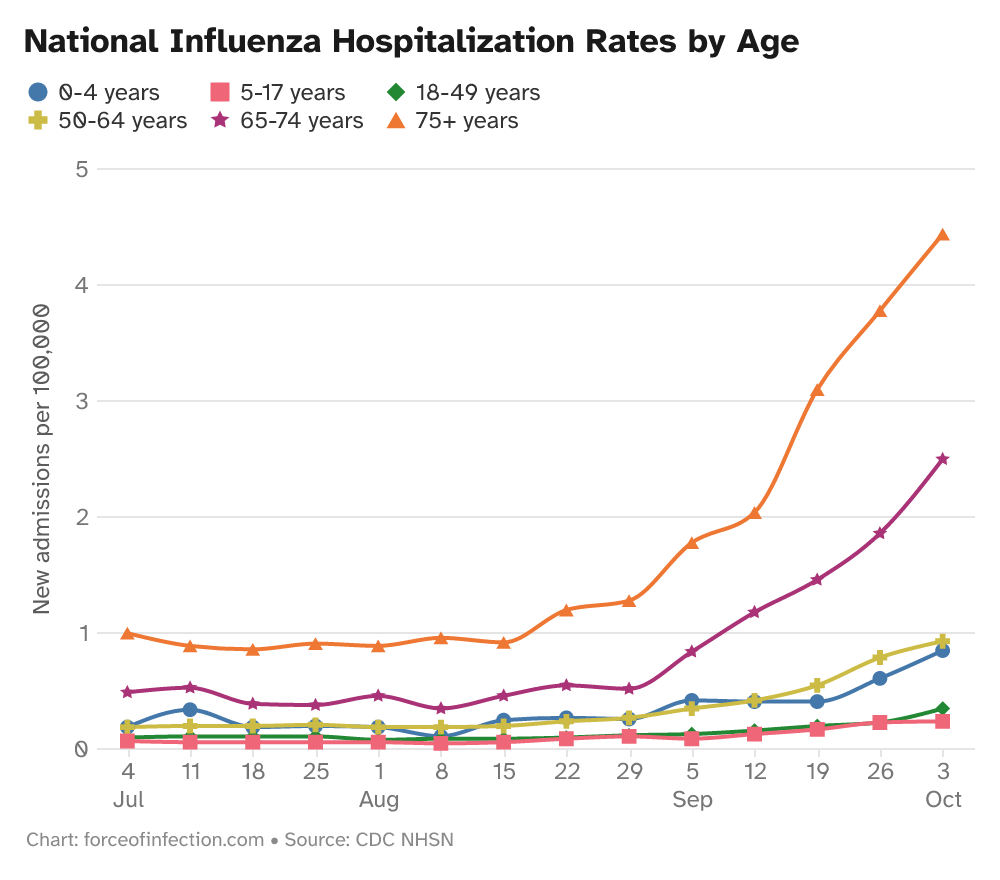
The Western and Southern regions also have elevated hospitalizations at 1.2 per 100,000 and 1.1 per 100,000, respectively. Last year at this point, hospitalizations were at 0.2 and 0.4 per 100,000. This is about seven to nine weeks ahead of last year’s timing.
Looking now at impacts by age, people ages 75 and older have the highest rates of hospitalization for influenza, now at 4.4 per 100,000 up from 3.8 the week prior. People ages 65-74 are also disproportionately impacted at 2.5 per 100,000.
COVID-19
The summer Covid-19 season is receding, and we can now say that it was modest. Emergency department visits for Covid-19 peaked in early September at under half of last summer’s peak (0.6% compared to 1.7%). Current ED visits are 0.5%, with the West and South most affected at 0.6% for both.
Force of Infection will switch to the winter publication schedule on October 18. The national edition will be free for all subscribers. Paid subscribers can elect to receive regional editions, with detailed information about every state. Click here to learn more about regional editions.
While national influenza activity remains low overall, transmission is accelerating, particularly in Western states.
As regular readers know, there are multiple metrics that I use to track disease activity. For influenza, that set includes outpatient influenza-like illness (which is the proportion of visits to the doctor that are for fever and cough or sore throat), emergency department visits, wastewater concentration, and test positivity.
Of these, test positivity shows the clearest increase. At a national level, test positivity has risen to 3.4%, up from a recent low of 0.4%. For context, this is still pretty low—peak season can exceed 30% test positivity. (That is a human-written em-dash!)
At the regional level, though, notable differences emerge. HHS Region 9, which includes California, Arizona, Hawaii, and Nevada, is reporting a test positivity of 7.1%, a marked increase over 3.4% reported just two weeks ago. HHS Region 10, which includes Alaska, Idaho, Oregon, and Washington, is at 6.0% (a slight decrease from last week's 6.5%). Both of these regions have low-but-rapidly-increasing emergency department visits for influenza, particularly in children.
Other regions of the country are beginning to see increases as well, though the overall trends are more recent and less dramatic at present.
From these observations, I conclude that influenza is picking up steam in the West and that other regions of the country should expect activity to begin to pick up in the near term.
Outpatient influenza-like illness, which is the metric I report on most frequently here, is less dramatic. Current activity at the national level is 1.7%, which is well below the baseline of 3.1% that marks the start of flu season. The Western region is highest at 2.0%, though still low. It's not clear to me why outpatient ILI is not reflecting the increased activity evident in test positivity and ED visits. Leave a comment or send me an email if you have ideas!
As always, outpatient influenza-like illness is highest in children ages 0 to 4, currently at 5.5%, up from a recent low of 3.2%. People ages 5 to 24 are also seeing increases, now at 2.6%. Older age groups are all at or below 1.5%. Looking at more severe illness as measured by emergency department visits, the most affected age group is children ages 1 to 4, followed by children ages 5 to 17. Activity has been rising week over week for the last month or so in those age groups.
Nearly all (96.4%) of specimens subtyped were H1N1pdm09. However, only 55 samples were subtyped, so there is not a lot to go on. This season's flu vaccine formulation does include an H1N1 strain, which was selected based on viruses circulating last season. How well it matches will not be clear until later in the season.
COVID-19
National Trend
Covid-19 activity continues to decline slowly. Test positivity at the national level has declined slightly to 4.9%, down from a recent high of 5.7% in late August. Emergency department visits for Covid-19 are stable at 0.5%. And according to CDC's Center for Forecasting and Outbreak Analytics, Covid-19 is stable or declining in most Southern states (broadly defined), while states in north and New England have yet to turn the corner.
All age groups have seen improvements except people 65 and older, in whom activity is stable. Children less than one year old remain most affected, followed by children ages 1-4, as measured by visits to the emergency department for Covid-19.
It's that time of year again. The fourth annual regional editions of Outbreak Outlook launched October 18.
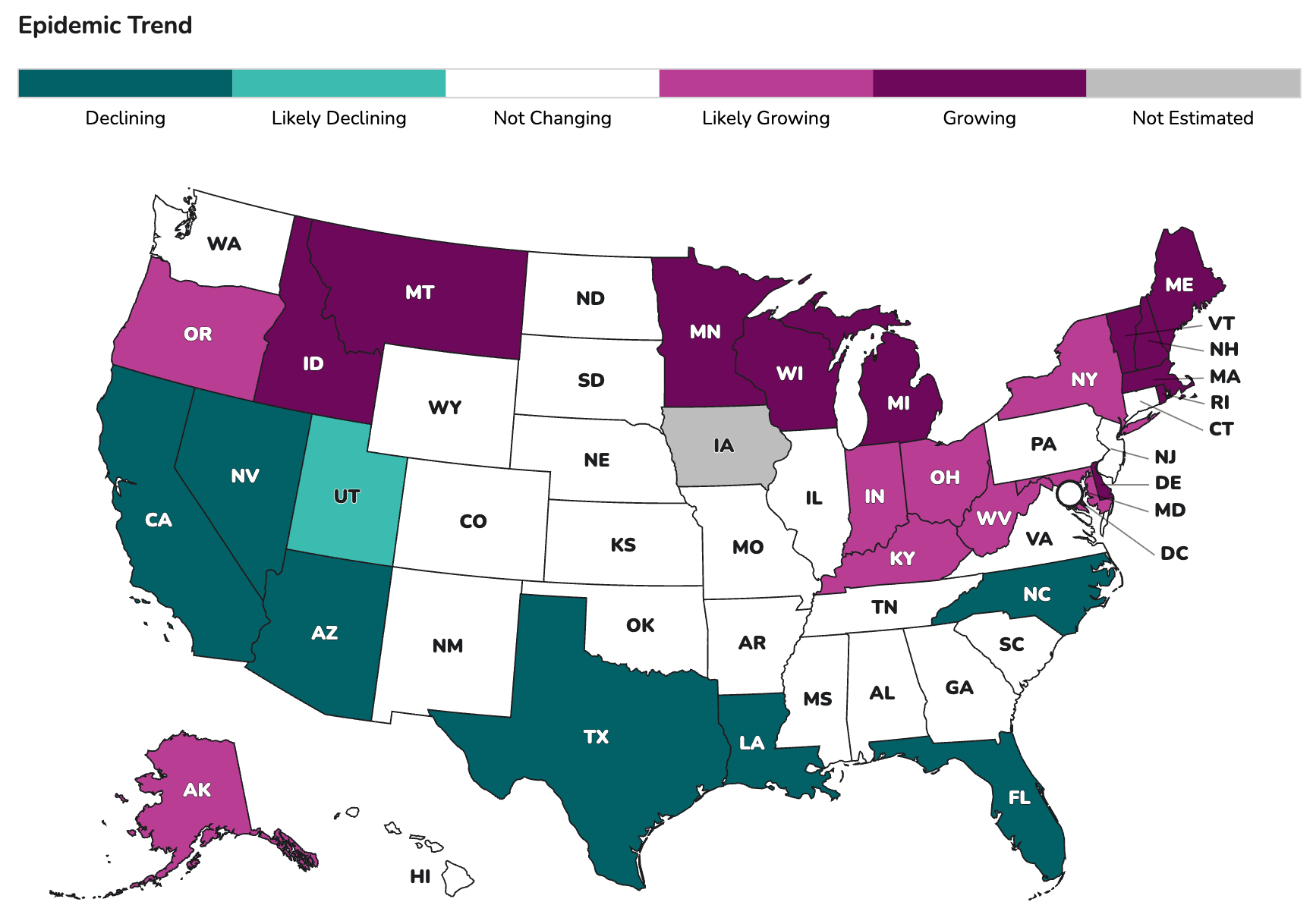
Respiratory virus activity varies a lot from place to place. Already this fall, flu activity is increasing in the West while most of the country remains low. The regional editions track and report these differences state by state, so you can make more tailored decisions based on local trends.
Here is what you need to know about opting in:
What is Outbreak Outlook?I send out a weekly report on infectious disease activity, including respiratory viruses, plus food recalls. These updates are useful for older adults, parents, people with weakened immune systems, and anyone looking to stay well.
A reader wrote to draw my attention to several indicators of early flu activity in the West. I took a second look at the data, and I have to revise my earlier assessment that an early flu season wasn't likely.
Pacific states are seeing a rapid rise in test positivity for influenza. This pattern is somewhat softened by unremarkable outpatient data, but the test positivity is striking. Take, for instance, this snapshot of influenza test positivity in HHS Region 9 covering California, Nevada, Arizona and Hawaii. Influenza A test positivity, shown by the yellow line, has risen sharply.
However, one important note of caution: test positivity can be misleading this early in the season, because not many specimens are tested compared to, say, December. For instance, in the region shown above, only 241 positive tests were reported during the most recent reporting week. During peak season, it'
Force of Infection is now on the summer schedule, meaning national Outbreak Outlook updates are available only to paid subscribers. The winter schedule, including the free national version, will resume in October. To continue receiving reports during the summer, please upgrade to paid.
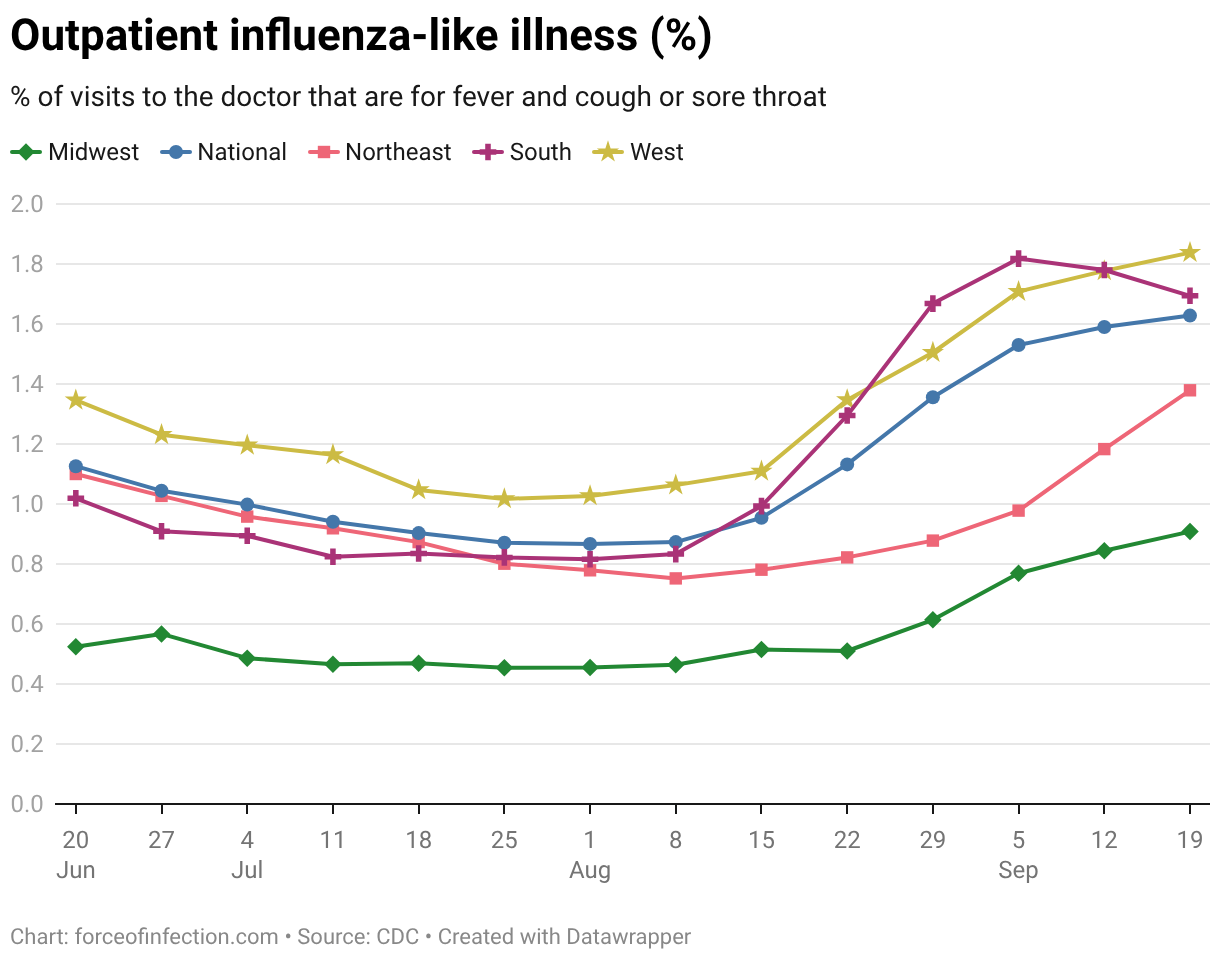
Still not much happening. Influenza-like illness activity (which is visits to the doctor for fever and cough or sore throat, also known as ILI) is at 1.6%, about the same as the week prior. Emergency department (ED) visits for influenza are drifting up, but remain below 0.5%.
Current activity is pretty typical for this time of year. I don’t expect a particularly early season, which means there is no immediate hurry to get vaccinated. Before Halloween should be adequate; I’ll let you know if my recommendation on timing changes.
The South has seen a slight decrease in activity, from a recent high of 1.8% to 1.7%. However, I do note that Florida has rising levels of influenza activity as measured by outpatient ILI, ED visits, and hospitalizations. I'll keep an eye on this in the weeks ahead. A few other states are also a bit high. In the Northeast, New Jersey stands out with 2.7% outpatient ILI and in the West, Alaska is reporting rising activity across several indicators.
As always, young kids have the highest levels of activity. Outpatient ILI has risen steadily in children ages 0-4 since mid-August. People ages 5-24 have seen some relief following an initial back-to-school rise. Adults are in pretty good shape.
COVID-19
National Trend
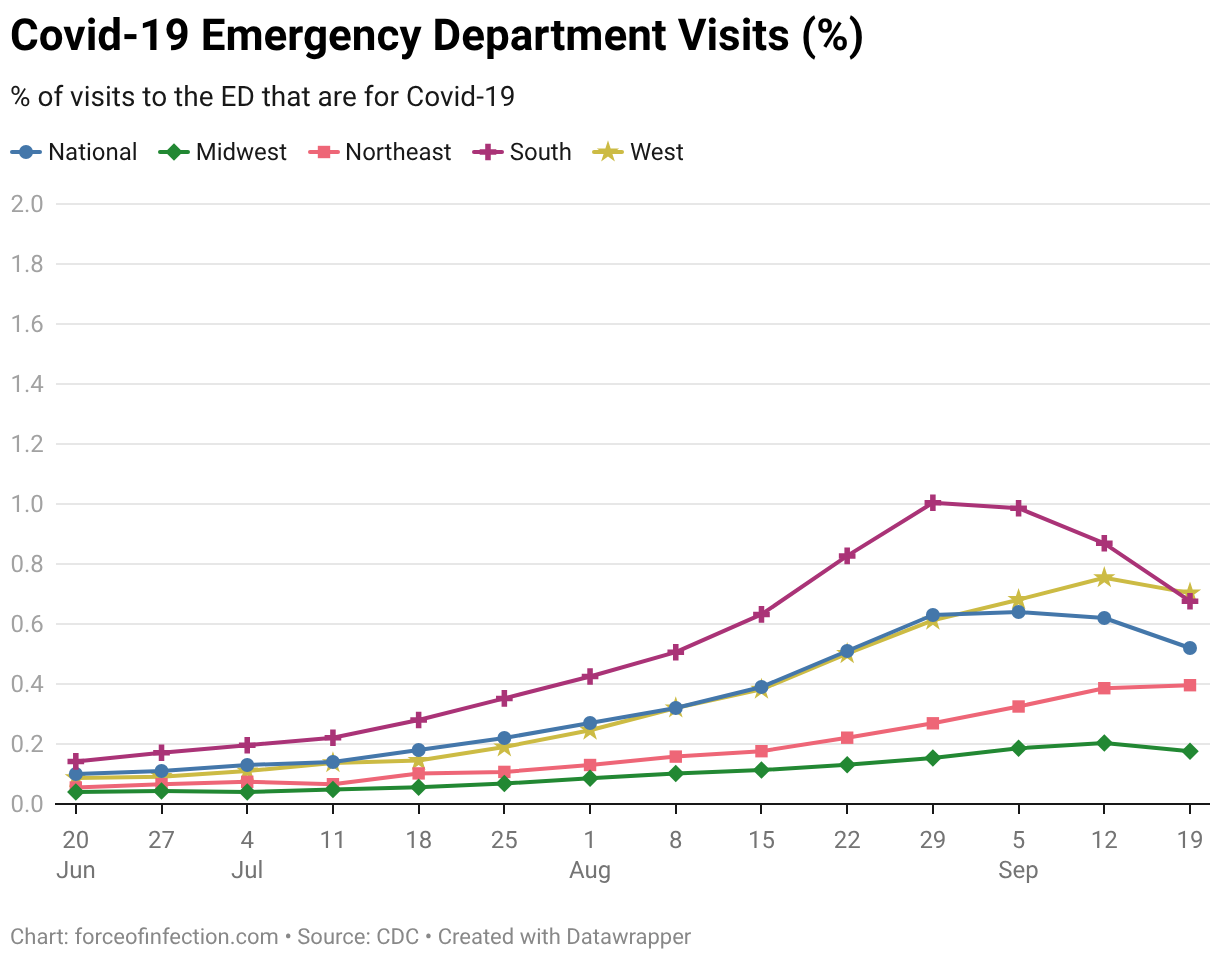
Covid-19 activity has peaked for most regions of the country and is now declining slowly. Around 0.5% of visits to the emergency department are for Covid-19, down from a Labor Day peak of 0.6%. Wastewater concentration is jumping around a bit at the regional level, but is mostly flat. Hospitalizations are holding steady and test positivity is declining.
Guide to seasonal vaccinations for people who are immunocompromised
As I shared in my recent State of the newsletter update, I want to spend more time on immunocompromised (IC) readers, who are often left out or brushed aside in public health updates. So, I put together an IC guide to seasonal vaccinations using information from reputable sources. Most of it summarizes 2025 guidance developed by the Infectious Diseases Society of America, a professional organization of infectious disease doctors. Other sources are linked within. This post is free for everyone, so please share.
Force of Infection is a reader-supported publication. To support this work, consider upgrade to paid.
Bottom line: Get vaccinated every year. For people who are immunocompromised, a second dose (given at least two months after the first) is likely to make protection last longer. You do not need to show documentation to prove you are eligible for a second dose; self-
This summer marks Force of Infection's fourth anniversary. I started this publication after returning from a stint at CDC. It began as a way to reflect on emerging infectious disease outbreaks, but I quickly learned that readers wanted news they can use about viruses that keep us out of work and school. Thus Outbreak Outlook was born, bringing weekly reports on flu, Covid-19, and RSV to your inbox year-round. I've published some 600 editions to over 47,000 readers, through data blackouts, holiday seasons, and an ever-changing political landscape.
This year has brought two big changes. Force of Infection moved off Substack and onto forceofinfection.com. It was a leap of faith to move away from a platform with a ready audience, but independence from the algorithm was worth it.
I also launched FOI Clinical, a publication for clinicians and public health practitioners. Whereas Force
There is currently a large outbreak of cyclosporiasis, a foodborne illness, that’s making headlines. Here’s a brief look at what you need to know.
There is a very large outbreak of cyclosporiasis underway. Current reports are concentrated in southeast Michigan and northwest Ohio – Michigan has reported over 700 cases since late June, which is approximately 14 times the state's annual average. Cases have been identified in at least 18 states, including New York, North Carolina, Indiana, and Texas, with an unofficial national count (based on state reports) likely exceeding 1,200. It's not yet confirmed whether these state clusters share a common source.
Cyclospora cayetanensis is a microscopic parasite that inhabits the small intestine. Infection begins when someone ingests contaminated food or water. Fresh produce like herbs, leafy greens, fruits, etc. are most commonly implicated. Unlike some other stomach bugs you may be familiar with, like
It is that time of the year again! In the United States, Memorial Day weekend marks the unofficial start of the summer. That means longer days, beach trips, kids splashing in pools, picnics, barbecues, and lots of time outdoors. But staying safe is just as important as having fun, which is why every year I share a few first aid videos to remind readers of the basics. I specifically chose these videos because they are only 2-5 minutes long, so you can get through the entire set in about 15 minutes.
When an emergency happens, many of us freeze. It is a natural response. Our brains are hard-wired for the “fight, flight, freeze” response, an automatic reaction to perceived threats that can make it hard to think clearly. But learning a few basic skills ahead of time, can help you stay calm and feel more prepared if something
This is the second installation in a series about respiratory viruses and their complexities. The first essay explained less common viruses like human metapneumovirus and adenovirus. Today, we're taking a deeper look at disease surveillance.
Why don’t I know what I have?
If you go to the doctor or hospital with what feels like a “cold,” there’s a set of decisions happening behind the scenes about whether to test you, and for what.
In most outpatient settings, testing is usually “targeted.” This means you might get a single test (for example, just for influenza), or a small “triplex” panel that checks for the most common viruses: SARS-CoV-2, flu, and RSV. These are the pathogens where a diagnosis can directly affect care or
Force of Infection is mid-move. This week, we are moving off Substack and over to forceofinfection.com. Pardon our dust while we get settled at the new site. And don't worry, you do not need to take action to continue receiving our emails.
A new Covid-19 variant has been making headlines lately, and this one has an unusual name. BA.3.2, nicknamed "cicada", has been detected in at least 25 U.S. states and 23 countries. Here's what we know so far.
Why "cicada"?
Cicadas are famous for spending years underground before emerging in enormous numbers, sometimes after 13 or 17 years of dormancy. BA.3.2 follows a loosely similar pattern: it was first identified in South Africa in November 2024, circulated at very low levels for over a year largely under the radar, and then emerged more forcefully in Europe last fall before
Force is growing, and so is the team. I'm excited to welcome Gage Moreno, PhD, as a contributing writer. Like our upcoming move to a standalone website, expanding the team is part of the plan to make this publication more valuable to you over the long term. This is the first explainer in a two-part series; Part II will cover how epidemiologists track these pathogens, and what future technologies might improve surveillance. -Caitlin
If you’ve ever been sick with “a cold,” yet tested negative for flu and Covid-19, you’ve already bumped up against a hidden world of viruses.
“A cold” isn’t a single illness it’s a label used for dozens of respiratory pathogens that circulate every year, most of which are rarely tested for. Even though they are largely invisible to patients, these viruses cause real illness, drive outbreaks, and shape
Yesterday, the U.S. CDC issued a Health Alert Network (HAN) advisory about New World screwworm cases on the Mexico side of the Texas-Mexico border. New World screwworm is primarily a disease of livestock, though humans can become infected. There are currently no human or animal cases in the United States, though it is an encroaching threat.
Against the backdrop of resurgent pertussis and measles, a recent infant botulism outbreak, and a changing vaccine schedule, screwworm feels like a distant concern. Yet clinicians have not received a HAN on these more pressing issues. The last advisory covering a disease with U.S. cases was in March, three HANs ago.
This is the gap I want to close with FOI Clinical, a new outbreak monitoring service I’m launching. There is no quick, easy way for front-line clinicians like pediatricians, family doctors, or emergency physicians to get a recurring,