

A reader wrote to draw my attention to several indicators of early flu activity in the West. I took a second look at the data, and I have to revise my earlier assessment that an early flu season wasn't likely.
Pacific states are seeing a rapid rise in test positivity for influenza. This pattern is somewhat softened by unremarkable outpatient data, but the test positivity is striking. Take, for instance, this snapshot of influenza test positivity in HHS Region 9 covering California, Nevada, Arizona and Hawaii. Influenza A test positivity, shown by the yellow line, has risen sharply.
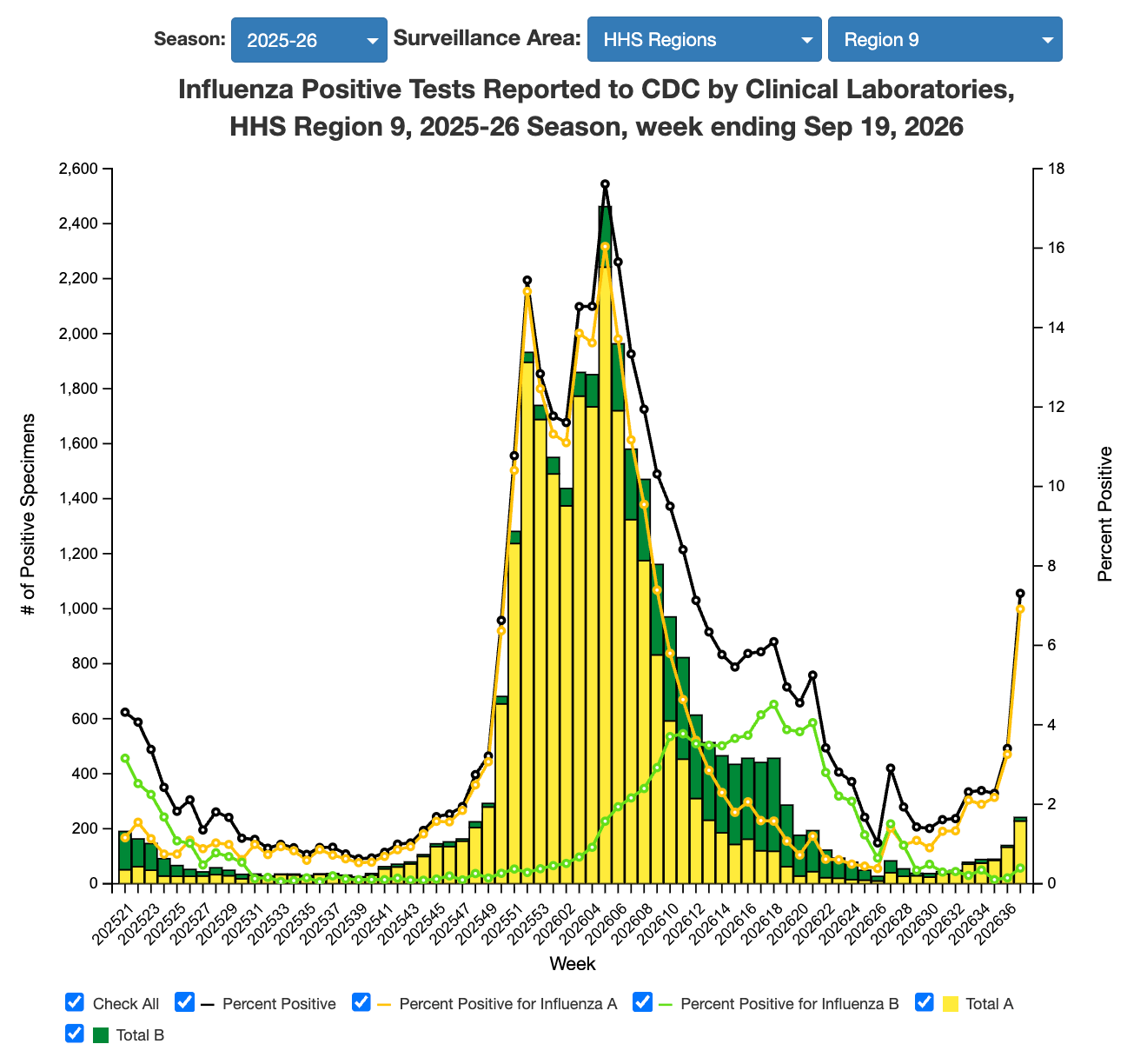
However, one important note of caution: test positivity can be misleading this early in the season, because not many specimens are tested compared to, say, December. For instance, in the region shown above, only 241 positive tests were reported during the most recent reporting week. During peak season, it's more like 2,500.
Still, there is something afoot. To dig deeper, I looked at the health department dashboards for each state in the Pacific Census division, where signs of increased activity are most pronounced. Most show increasing test positivity out of step with what we normally see this time of year.
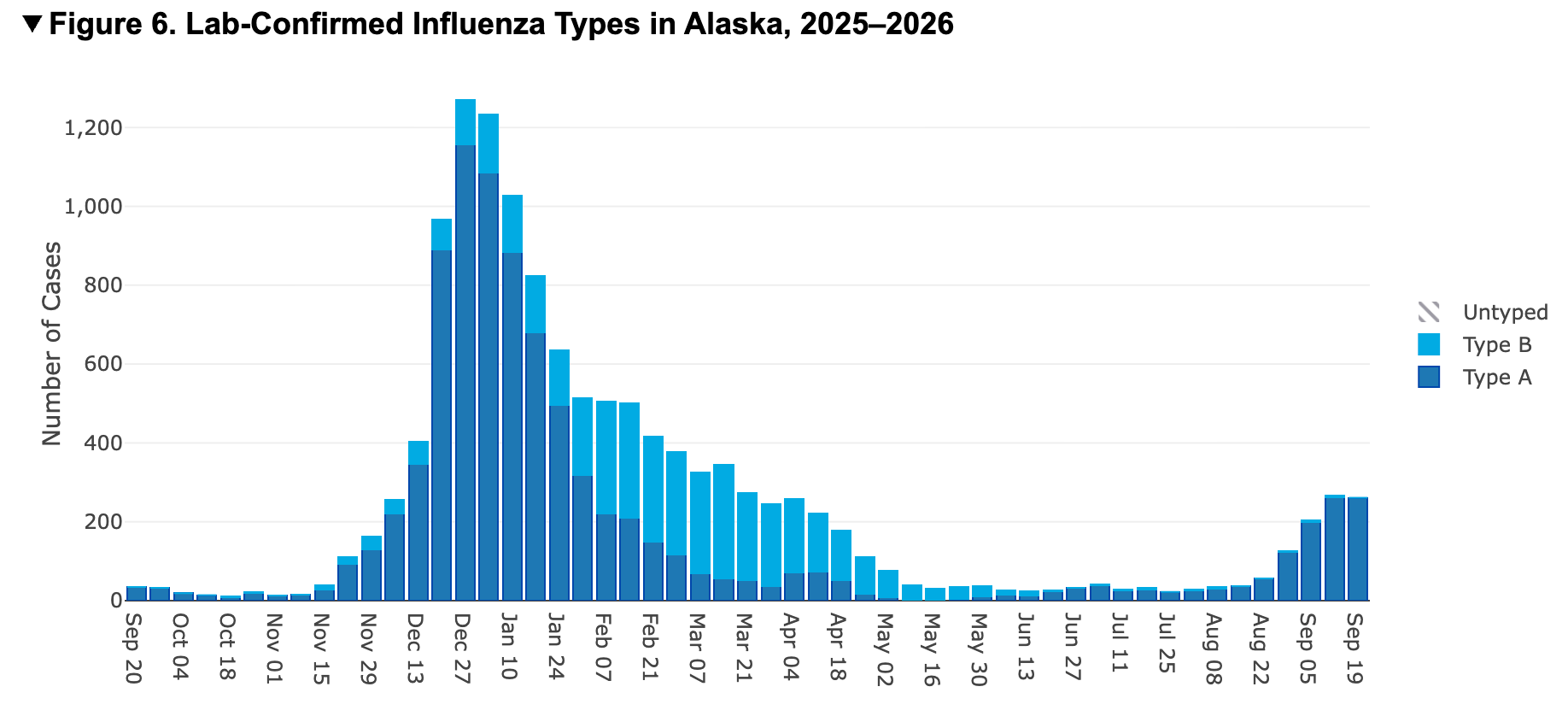
In Alaska, flu A test positivity has been rising for several weeks now and is on par with what was recorded last December. Emergency department (ED) visits for influenza are also elevated, at 1.8%. Wastewater concentration is moderate, though only one site is reporting so there isn't much to go on.
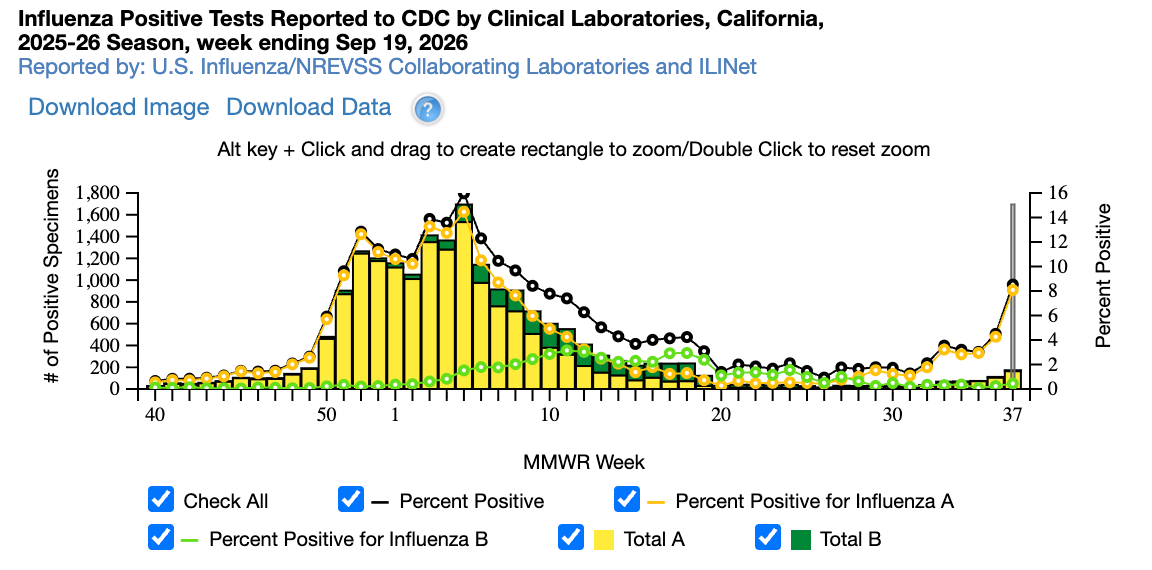
In California, test positivity on the state dashboard is moderate at 5%, mostly flu A. The Bay Area is most affected, with a test positivity there of 7%. However, CDC data from clinical laboratories puts flu A test positivity higher at 8.5%. ED visits for flu remain low at 0.4%, but up a bit compared to this summer's low of 0.1%.
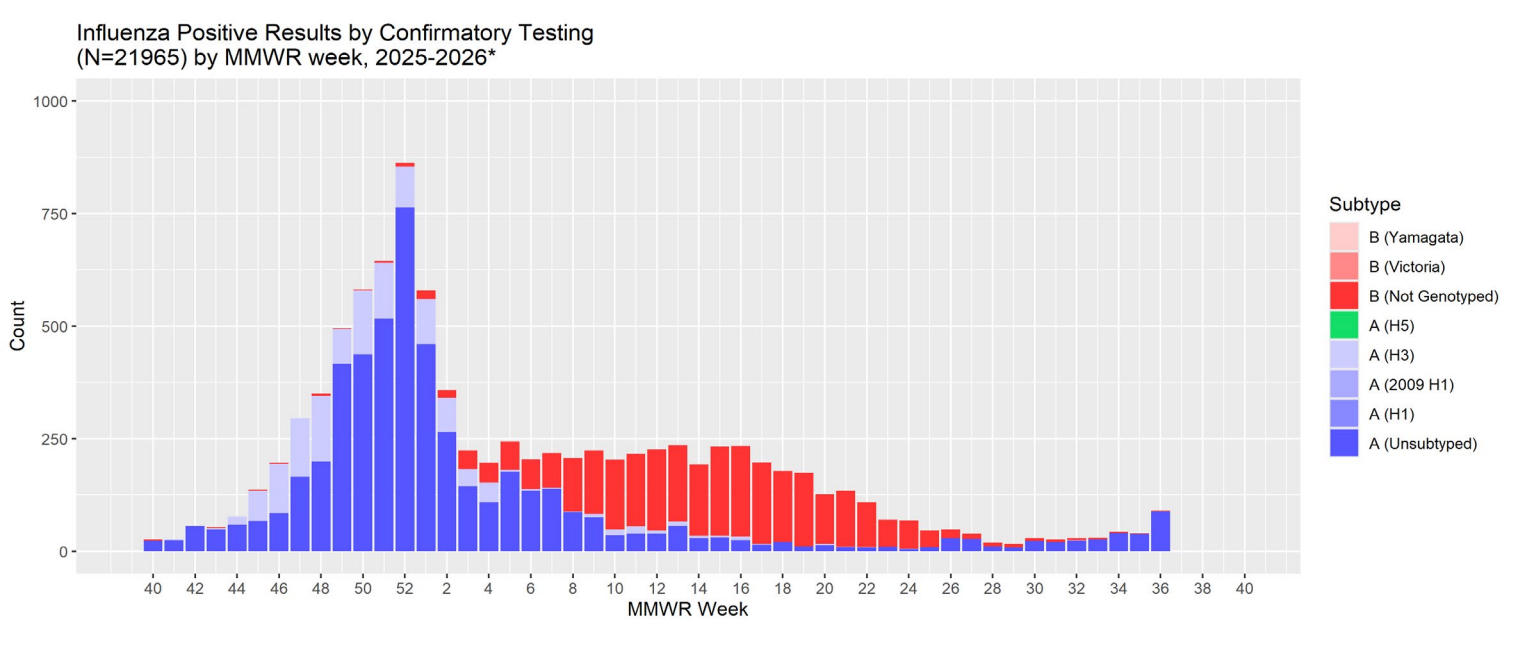
In Hawaii, activity began to increase recently. Test positivity is now 6.3%, mostly H3. ED visits are also increasing, including a recent jump from 1% to 1.4%. Children and older adults are most affected, again as measured by test positivity. Wastewater concentration is moderate, with three sites reporting.
In Washington, test positivity is high and rising at 8.4%, according to CDC data. ED visits are at 0.9%, which is below the state's activity threshold of 1.4%, but rising. Children ages 0-4 are most affected, as measured by ED visits. Wastewater concentration is very low, with 26 sites reporting.
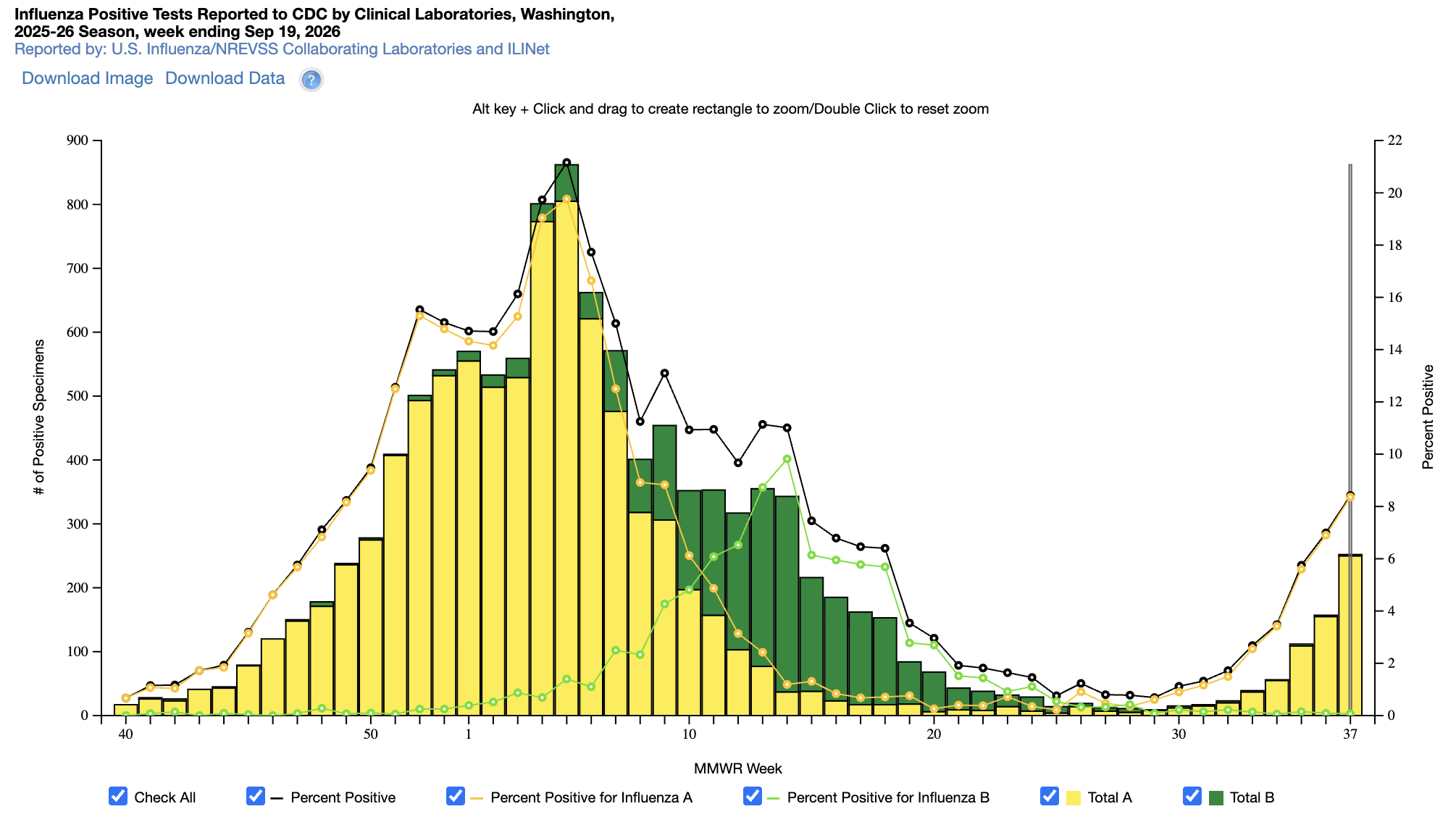
Oregon has not begun reporting data for the flu season.
Increases in the test positivity metric are also evident in other parts of the country, but to a lesser degree. Here's a look at test positivity by Census division. (But remember, test positivity is a bit wonky this time of year because of low volume; I've included the positive test count to aid in interpretation.)
New England: Low at 1.4%, count of positive tests is 32.
Mid-Atlantic: Low at 1.6%, count of positive tests is 59.
East North Central: Low at 2.0%, count of positive tests is 202.
West North Central: Low at 1.6%, count of positive tests is 73.
South Atlantic: Low, under 1%, count of positive tests is 33.
East South Central: Only 1 positive test
West South Central: Low at 1.9%, count of positive tests is 77.
Mountain: A bit higher at 3.0%, with a recent rise, count of positive tests is 120.
Pacific: High at 6.9% and rising quickly, count of positive tests is 488.
Bottom Line
For now, the early signal is concentrated in the West, with most of the country still at low levels. If you live in the Pacific states, consider getting a flu shot soon rather than waiting until later in the fall. I'll continue to monitor the data and report back soon with updates.