


Respiratory diseases
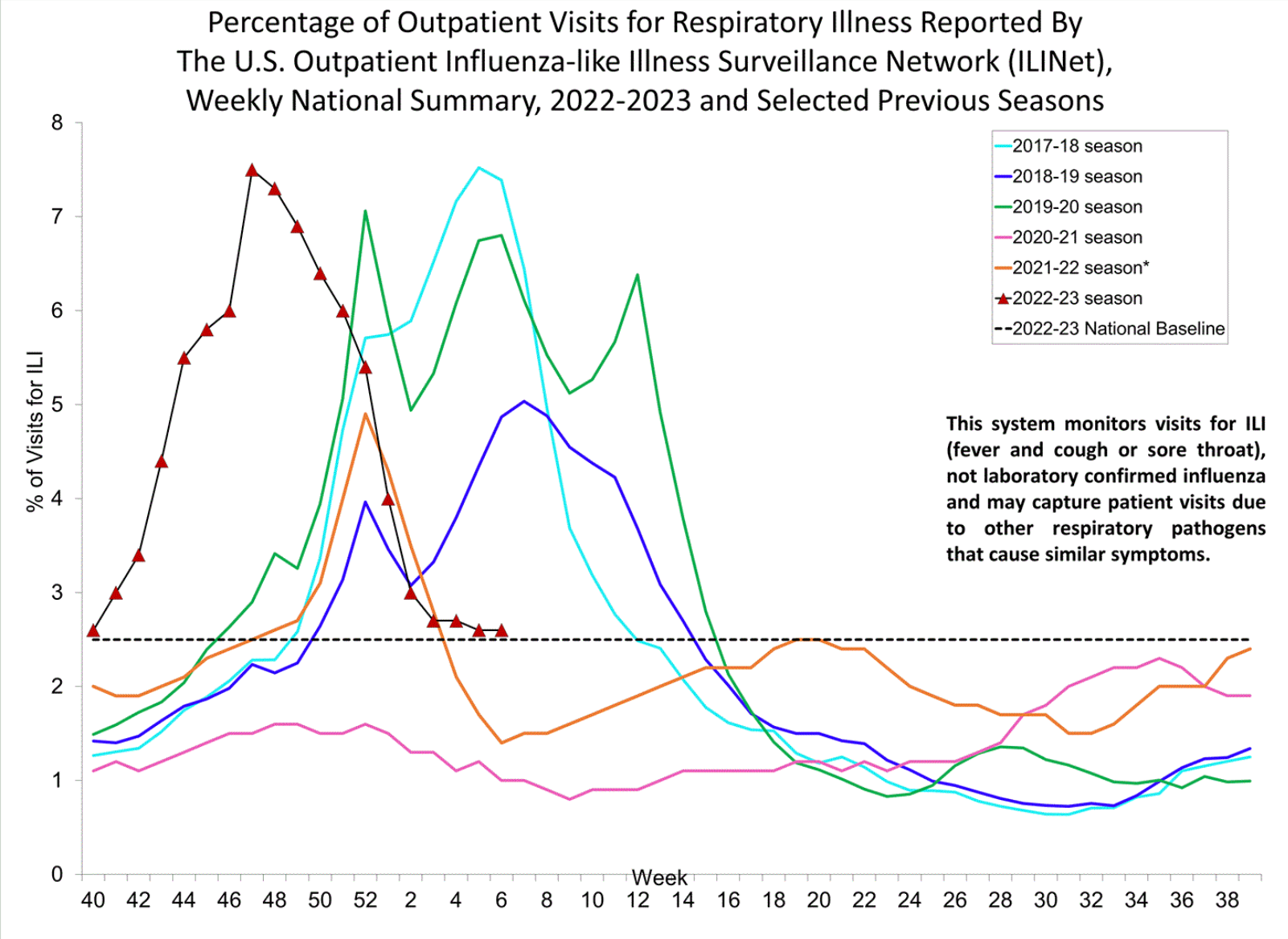
I’m beginning to think that the groundhog meteorologists were right: six more weeks of winter—or winter flu season, at least. Influenza-like illness (ILI) did not budge one bit this week, making it the fourth week in a row that we’re stuck just above baseline.
During the week ending February 11, 2.6% visits to the doctor for fever and cough or sore throat. Baseline is 2.5%. ILI activity remained stable in all age groups.
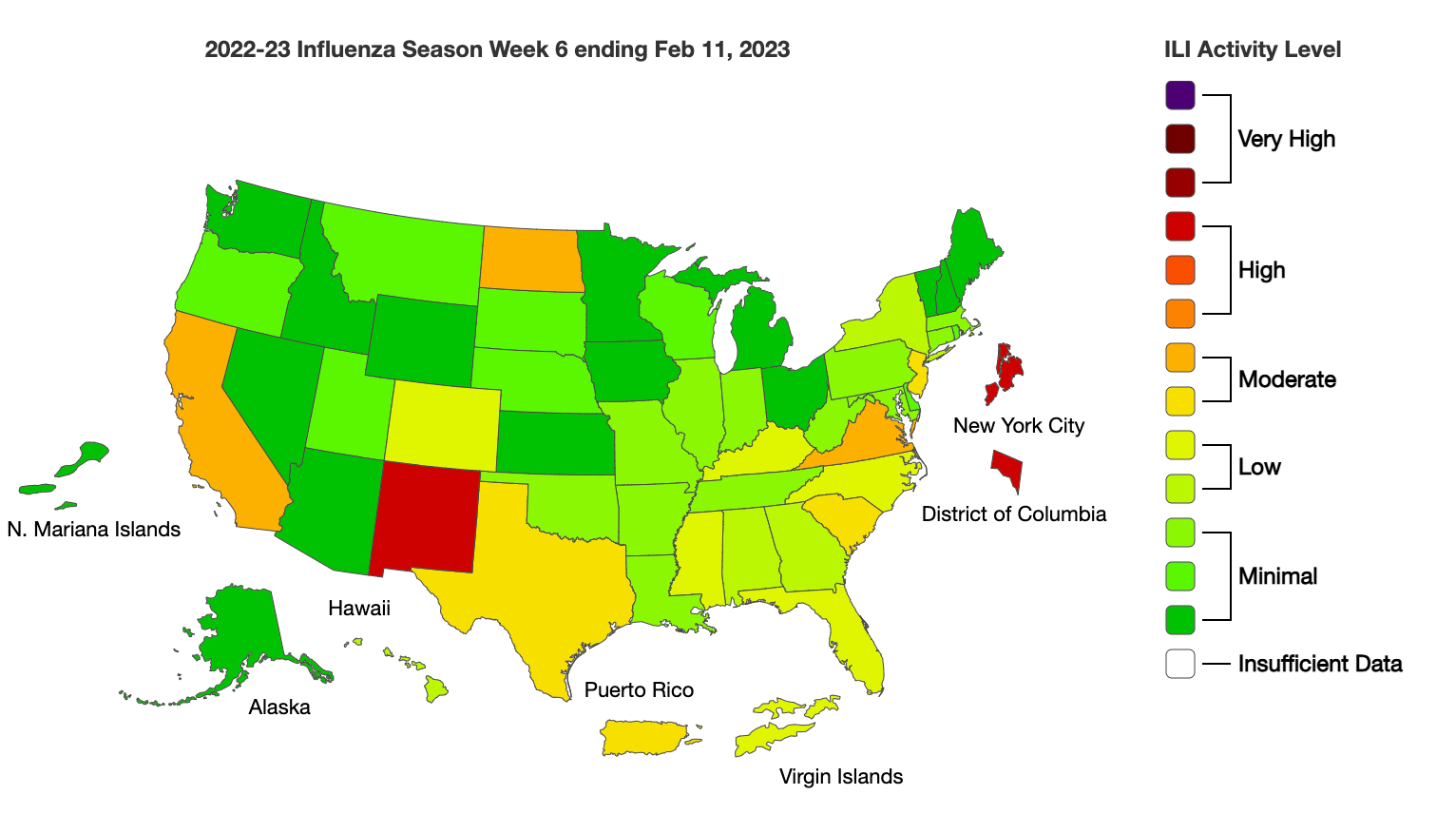
Puerto Rico was finally downgraded from high to moderate ILI activity, after a long stay in the high category. New Mexico (4.4%), Washington, D.C. (4%) and New York City (5%) are the last holdouts in high. I’m keeping my fingers crossed for readers in those locations that the spell will break soon.
The rest of the map is looking good, with most jurisdictions in the low or minimal categories. This time of year is normally peak activity, so it’s certainly been an unusual season.
We’re still not seeing much influenza B, which sometimes causes a second, smaller wave in the spring. I’ll keep an eye out and let you know if that changes.
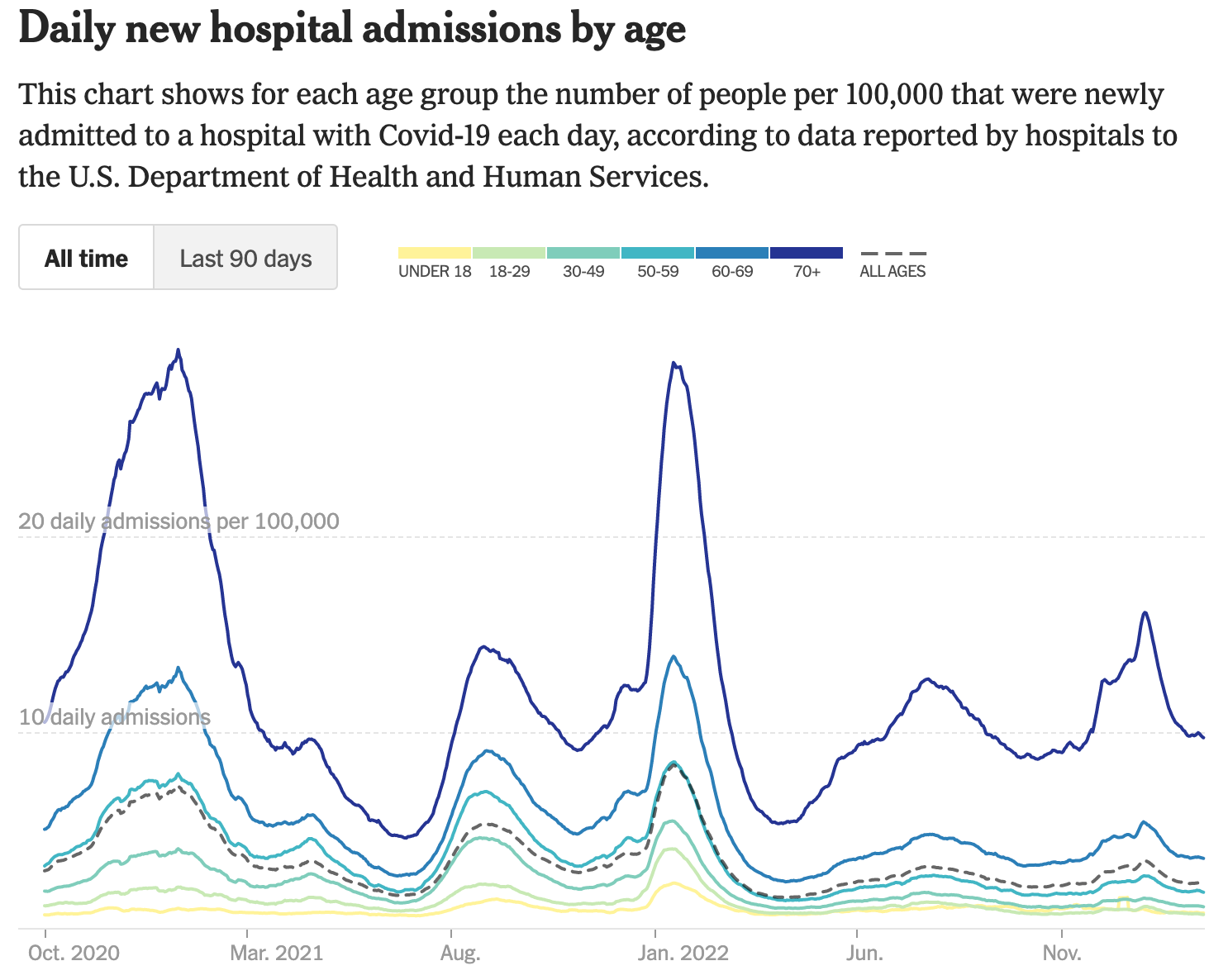
COVID-19 activity is stable. The slight bump in hospitalizations in older adults that I wrote about last week now looks to have smoothed out. Delaware, Washington, D.C. and North Carolina currently have the highest hospitalization rates, but there are improvements in all three locations.
Previous winter waves have been followed by months of relative calm until a summer wave begins, which has been first observed in the southern region. It will be interesting to see if that pattern continues this year.
We may (hopefully) be turning the corner on the seasonal coronaviruses, which cause cold-like symptoms. The northeastern region has certainly peaked, and the other three regions are showing a hopeful, though preliminary, decline in seasonal coronavirus activity.
I’d like to introduce you to the adenoviruses, because I’m half expecting those to be the next bug to go around. Like many other respiratory viruses, adenovirus infections cause fever, sore throat, and cough. Certain types can also cause pink eye and gastrointestinal symptoms. Like many common infections, we don’t have great surveillance systems for adenovirus, but hints from CDC and Biofire make me suspicious that activity is picking up.
RSV is declining.
Stomach bugs
Norovirus activity is still high! The midwestern region may have peaked, but the southern, northeastern and western regions have not. It’s a good time to be extra vigilant about washing your hands, disinfecting shared surfaces, and staying home if you have symptoms. This is especially important if you work or spend time in a high-risk setting like a nursing home, childcare facility, restaurant, or cruise ship.
For new readers, more on preventing norovirus: The biggest concern with norovirus is preventing dehydration. This is especially important in children and older adults, who dehydrate quickly. I keep Pedialyte powder packets in the pantry, because they take up less space and have a longer shelf life than bottles of liquid rehydration products. Water, broth, popsicles, diluted juice, sports drinks, etc. are also good options. Don’t fall behind by waiting until dehydration sets in. Encourage frequent sips from the onset of illness.
Norovirus spreads very easily between people through the “fecal-oral” route. To stop it from spreading, wash your hands thoroughly after using the bathroom and before eating or preparing food. I also use hand sanitizer while I’m in public like after I use self-checkout at the grocery store or when I use public transportation, but you should know that hand sanitizer is not as effective against norovirus as hand washing. Be sure to wash your hands properly when you get home. Most importantly, stay home if you have vomiting or diarrhea.
If someone in your household gets norovirus, you can reduce the chance it will spread by keeping them out of the kitchen and disinfecting contaminated (read: bathroom) and shared surfaces. Also regard laundry like bedsheets, clothes, and towels as contaminated. Use gloves when handling the items and wash them thoroughly with hot water on the longest cleaning cycle.
Food recalls
The following foods are being recalled because they are contaminated with bacteria that causes food poisoning. Please check your cupboards and throw out any of these items:
New this week:
- Various Signature Select Breakfast Bowls, including products containing sausage, egg, potatoes, and more. These items were sold in Nevada and California (more info).
Reported in the last month:
- EzriCare Artificial Tears Lubricant Eye Drops. The product is also distributed by Delsam Pharma. This is an especially important recall because the adverse events are very serious. Please check that you do not have any Ezricare or Delsam Artificial Tears drops in your cabinet (more info).
- Ready-to-eat sausage and charcuterie products sold by Daniele International, LLC (more info).
- There is also a multi-state outbreak of Listeria linked to deli meats and cheeses, but the specific source has not been identified. If you are pregnant, over the age of 65, or have a condition that weakens your immune system, consider avoiding meat or cheese from deli counters. (more info)
- If you have food allergies, you may wish to review these FDA safety alerts for foods with undeclared allergens.
In other news
I reported last week on an outbreak of an unknown illness in Equatorial Guinea that resembled a viral hemorrhagic fever. That outbreak has now been confirmed as Marburg virus disease, a close relative of Ebola. As of February 13, there were nine deaths and 16 suspected cases. I hope to see these numbers updated soon. There are no available vaccines or specific treatments, but there are a small number of candidate vaccines that may be fielded in clinical trials if the outbreak continues.
According to the UK Health Security Agency, reports of invasive group A strep (iGAS) infections have slowed somewhat, but activity remains elevated over what is normally seen this time of year. iGAS causes serious bacterial infections, with children and older adults at highest risk. Many countries have reported an increase in iGAS infections in the last few months; viral infections are thought to increase the risk of developing iGAS, so this year’s surge is likely linked to the “tripledemic.”