

Respiratory diseases
Levels of influenza like illness (ILI) activity remain high as we head into the winter holidays. According to data from the week ending December 3, one in thirteen visits to the doctor's office were linked to ILI (which includes both influenza and other infections that cause fever, cough or sore throat.) This is a slight decrease from the previous week, but is still much higher than normal for this time of year.
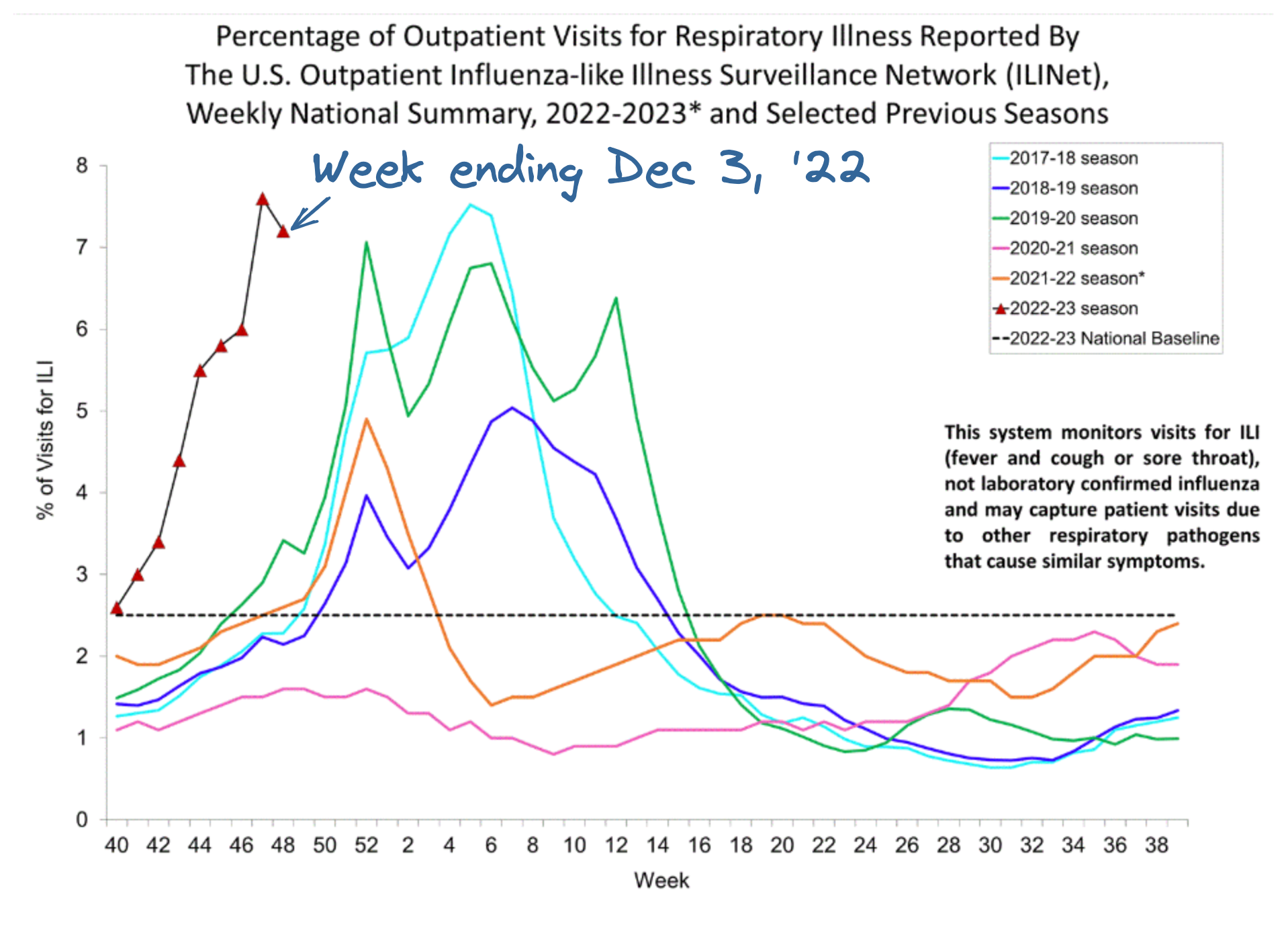
The highest levels of ILI activity were seen in preschool and school aged children, a reality that parents and pediatricians have been remarking on for weeks. Bureau of Labor Statistics data from 2022 also showed that the number of employed people who were not able to attend work due to childcare problems is double what it was before the pandemic, although this is not specifically due to illness.
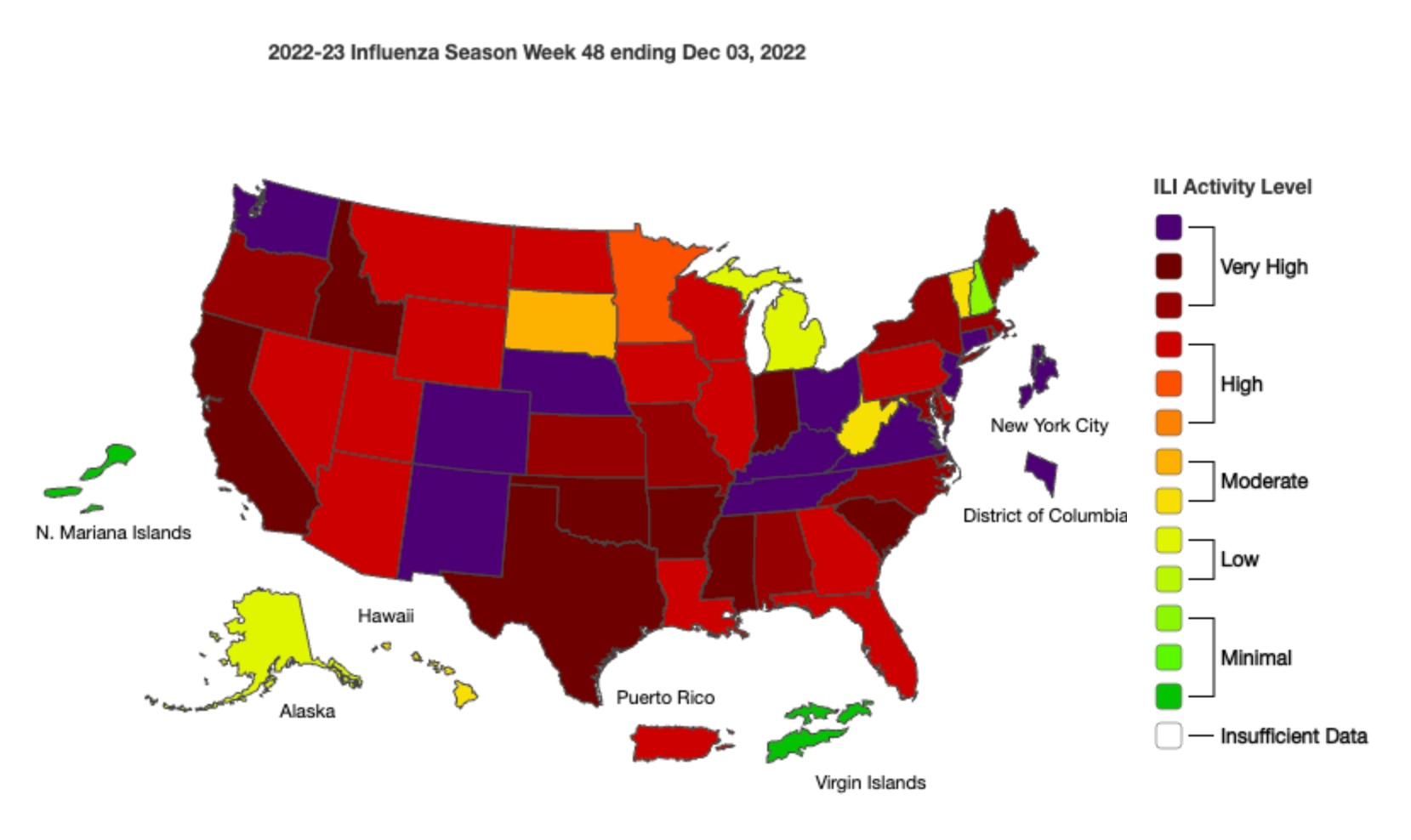
As in previous weeks, almost the whole country is reporting high or very high levels of ILI activity. While much of the Southeast has peaked, activity is still considered high, and parts of the Mid-Atlantic and West are seeing an increase.
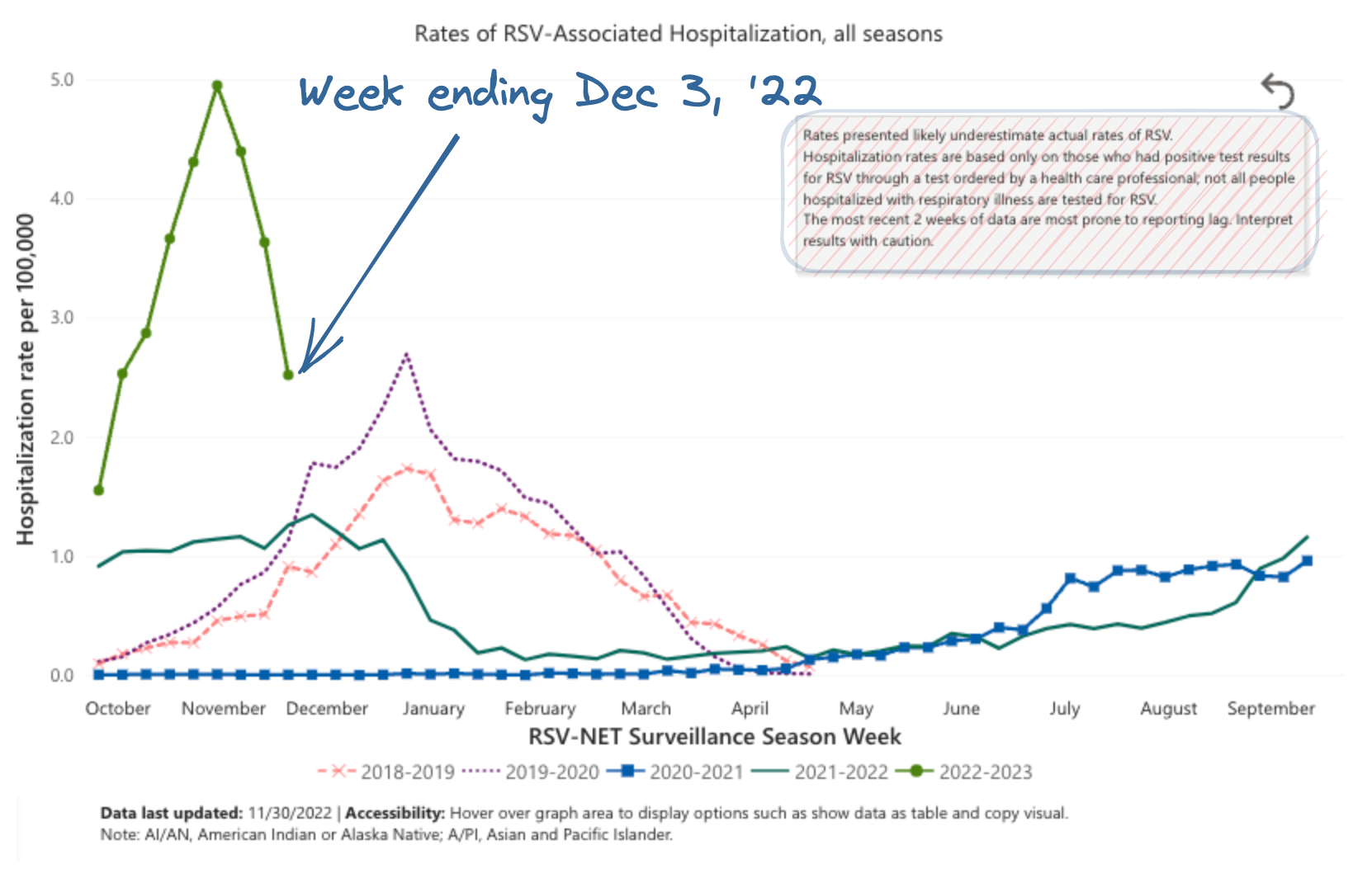
Although RSV activity remains high, the wave that was overwhelming children’s hospitals this past fall has dissipated somewhat. Throughout October and November, hospitalization rates due to RSV were extremely high, but in recent weeks they have dropped significantly. Although data on RSV is subject to revision, the current numbers suggest a genuine decrease.
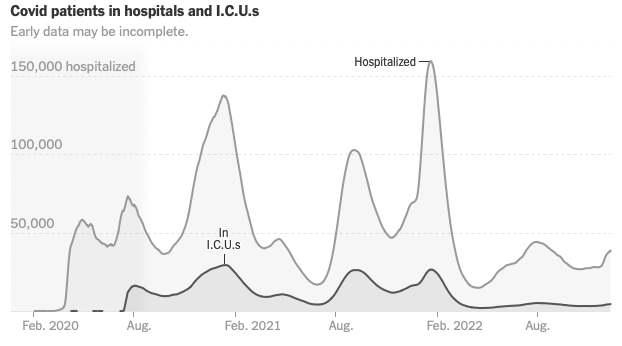
As the RSV wave begins to recede, a new wave of COVID-19 cases is taking its place. Reports of hospitalizations, test positivity and wastewater are all on the rise, with the west and northeast regions being the most affected. Older adults remain at highest risk of severe illness, yet only 34% of people over the age of 65 have received the updated booster. Please get the booster if you haven’t already, and remind the older adults in your life to do so as well. Also wear a high quality mask when in public, practice proper hand hygiene and be mindful of ventilation.
Stomach bugs
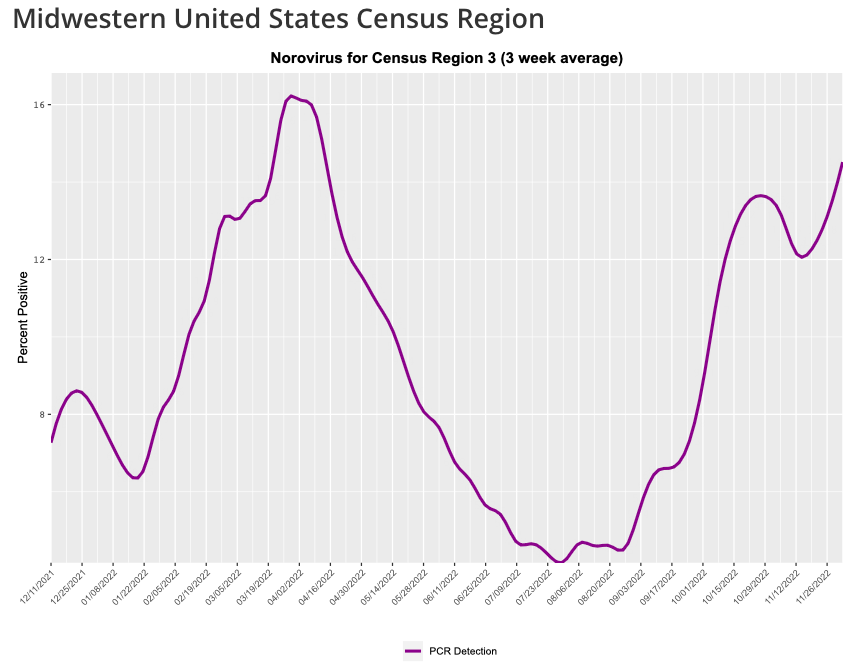
Although surveillance for the pathogens that cause vomiting and diarrhea is not as robust as I would like, there appears to be an increase in norovirus, which causes the classic "stomach bug". This is most evident in the midwestern region of the country, where the percentage of tests that are positive for norovirus is at 14%, up from 4-8% over the summer months.
More on preventing the stomach bug: Norovirus spreads very easily between people through the “fecal-oral” route. To stop it from spreading, wash your hands thoroughly after using the bathroom and before eating or preparing food. I also use hand sanitizer while I’m in public like after I use self-checkout at the grocery store or when I use public transportation, but you should know that hand sanitizer is not as effective against norovirus as hand washing. Be sure to wash your hands properly when you get home. Most importantly, stay home if you have vomiting or diarrhea.
If someone in your household gets norovirus, you can reduce the chance it will spread by keeping them out of the kitchen and disinfecting contaminated (read: bathroom) and shared surfaces. Also regard laundry like bedsheets, clothes and towels as contaminated. Use gloves when handling the items and wash them thoroughly with hot water on the longest cleaning cycle.
Food recalls
The following foods are being recalled because they are contaminated with bacteria that causes food poisoning. Please check your cupboards and throw out any of these items:
New this week:
- Favorina branded Advent Calendar sold at Lidl (more info)
- James Farm frozen raspberries sold through Restaurant Depot/Jetro (more info)
- Kraft ready-to-eat ham and cheese loaf products (more info)
Previously reported:
- Enoki mushrooms by Green Day Produce. (more info)
- Nestle edible Chocolate Chip Cookie Dough tubs with best-by dates of January 28-30, 2023 (more info)
- There is also a multi-state outbreak of Listeria linked to deli meats and cheeses, but the specific source has not been identified. If you are pregnant, over the age of 65, or have a condition that weakens your immune system, consider avoiding meat or cheese from deli counters. (more info)
- If you have food allergies, you may wish to review these FDA safety alerts for foods with undeclared allergens.
In other news
- Mpox (formerly monkeypox) transmission in the United States has declined to very low levels. The daily number of new cases is below 10, a welcome improvement over the 450 or so new cases that were registered each day at the height of the outbreak this summer.
- The Ebola outbreak in Uganda is also coming under control. Only a handful of cases have been identified in the last few weeks, and only six people are in quarantine for recent exposure. There have been 142 cases and 55 deaths to date.
- Health officials in the United Kingdom and Spain are reporting an increase in invasive Group A Streptococcus infections in children. Group A Streptococcus is a bacteria most commonly associated with strep throat and scarlet fever, but on rare occasions, it can also cause more serious infections, such as cellulitis, necrotizing fasciitis, and toxic shock syndrome.