


According to recent data, influenza-like illness (ILI) has been on the decline for several weeks. In the week ending December 24, approximately 1 in 16 medical visits were related to ILI, compared to 1 in 13 earlier in December. Influenza-related hospitalizations and outbreaks in long-term care facilities have also decreased. These improvements are likely to be genuine and not simply a result of holiday season changes in doctor visits or reporting inconsistencies due to the holiday.
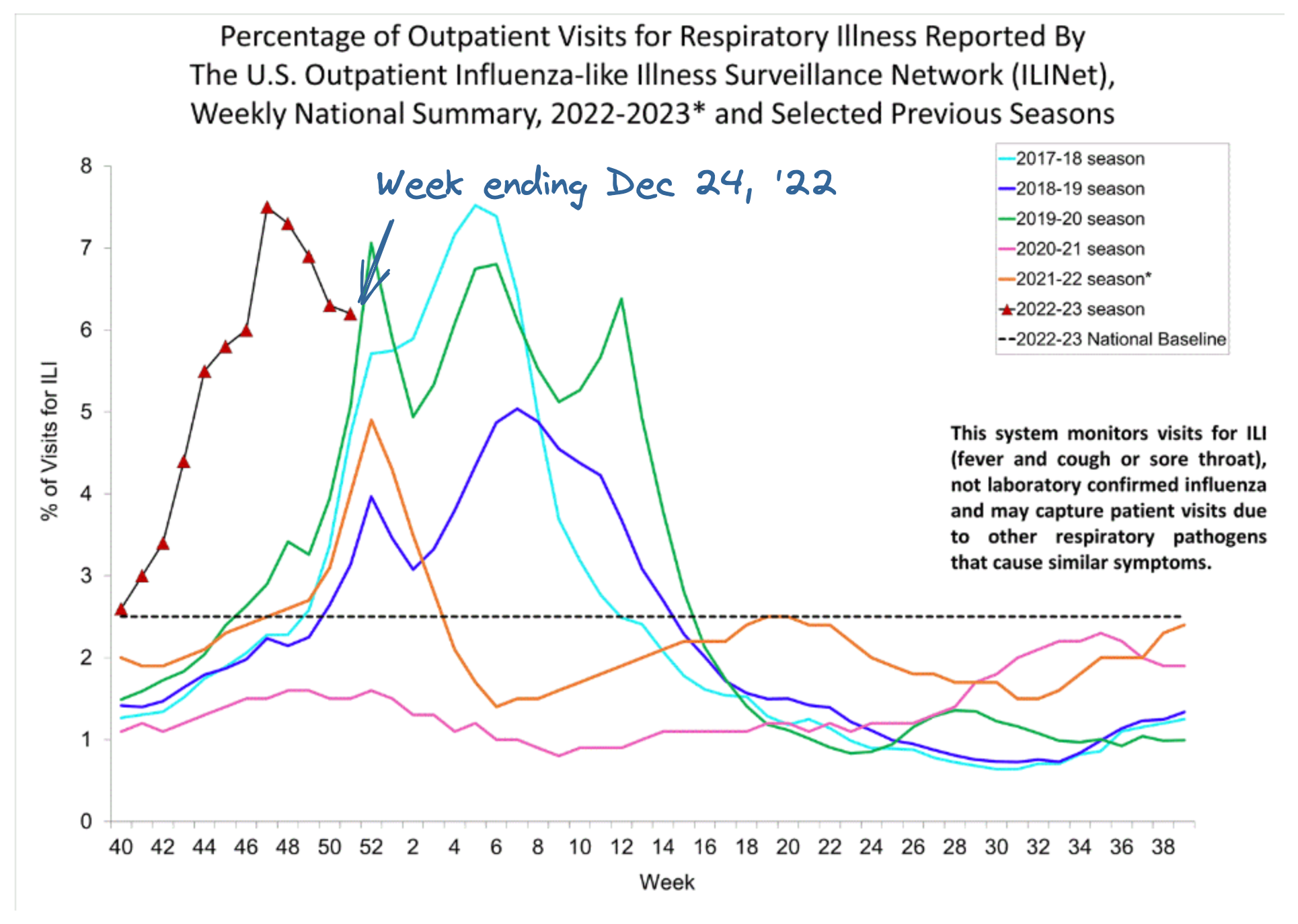
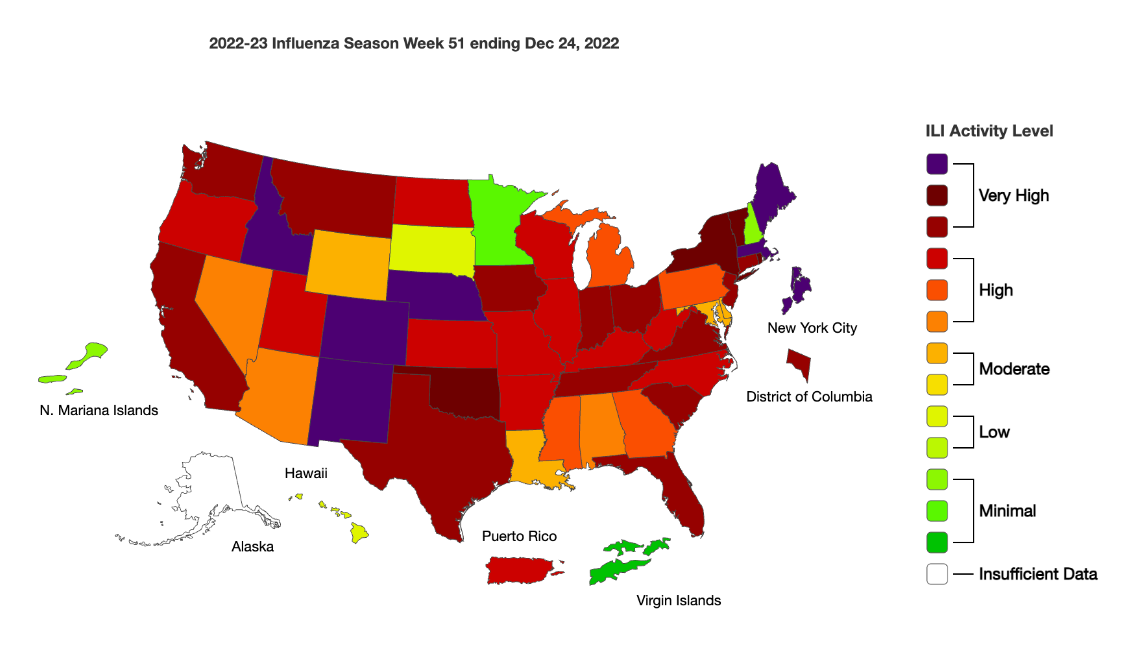
Although flu activity has decreased in recent weeks, most of the country is still experiencing peak flu season. In 44 states, influenza-like illness (ILI) activity is still classified as very high or high, with only 6 states experiencing low or minimal activity. We are not out of the woods yet with flu season, but I am hopeful that the worst is behind us.
A significant portion of the improvement in ILI activity is due to a decrease in cases among children. The proportion of medical visits for fever, cough, or sore throat among children ages 0-4 has declined from 17.5% to 14.6%, and among people ages 5-24, these numbers have fallen from 12.8% to 9.9%. While adult flu activity has not decreased as significantly, it was already at lower levels to begin with.
RSV has also continued to decline, another bit of good news.
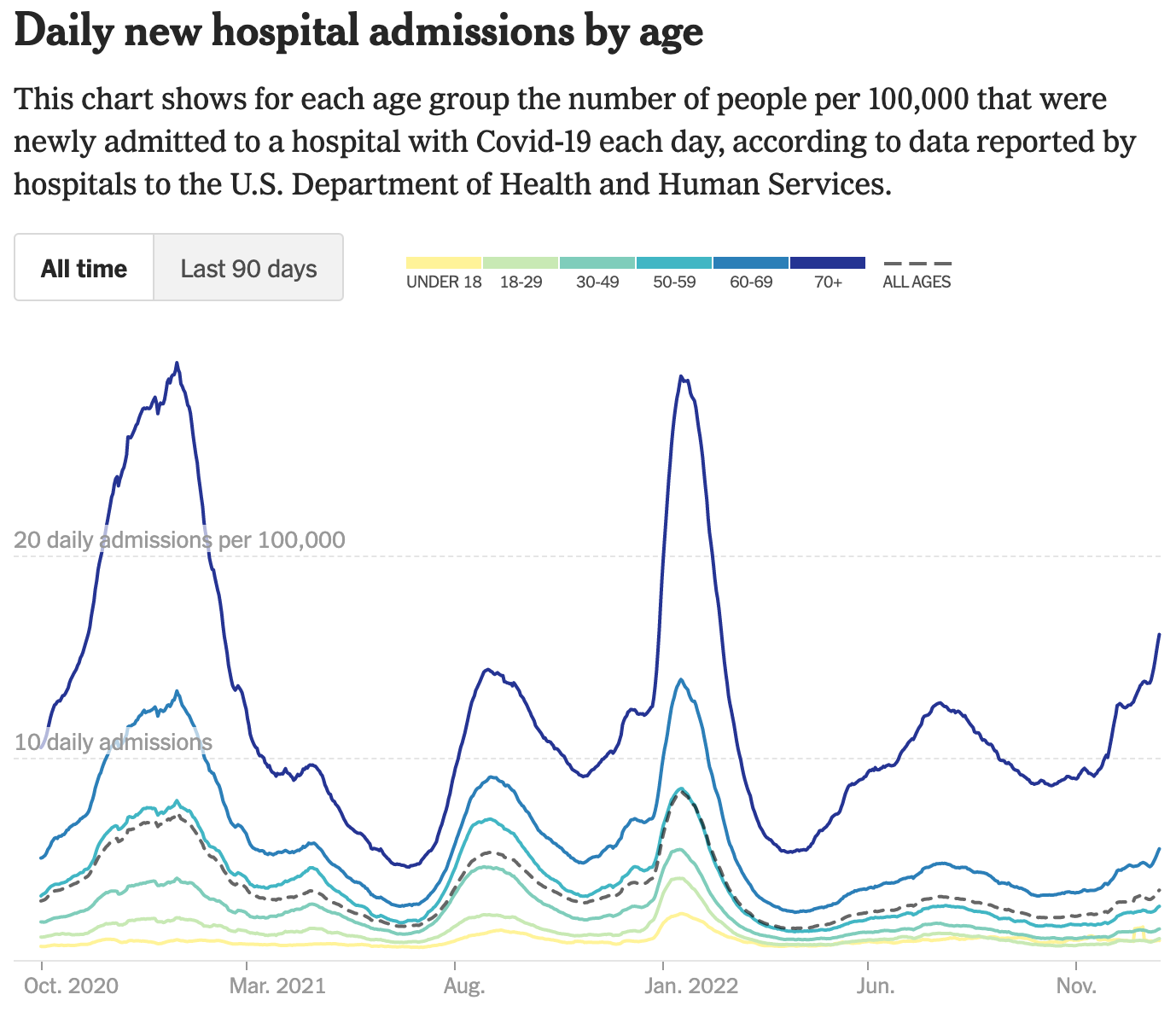
Now for the bad news. Unfortunately, it appears that COVID-19 is increasing, likely due to the emergence of the XBB.1.5 variant (more on the variant from Eric Topol here). While the number of cases may be flat, test positivity and hospitalizations are both increasing. Case counts may be affected by the use of home antigen tests and gaps in reporting during the holidays, so hospitalizations may be the most reliable indicator of COVID-19 activity. The jurisdictions most affected by the rise in hospitalizations include Washington D.C., Delaware, North Carolina, and Connecticut.
As I previously reported, the seasonal coronaviruses may be starting to tick up. There are seven known human coronaviruses, three of which can cause severe illness: Covid-19, SARS, and MERS. The other four mostly cause mild, cold-like symptoms and circulate regularly. Two of these mild, seasonal coronaviruses are currently on the rise.
Finally, there is now widespread evidence of a surge in group A streptococcus (GAS), a bacterial infection that most people know as the cause of strep throat. While strep throat is a mild illness, GAS can sometimes cause more severe diseases like scarlet fever, bacteremia and necrotizing fasciitis. Multiple European countries have reported an increase in these invasive cases, as has the United States and Uruguay. Although invasive GAS is rare, swift diagnosis and treatment is crucial, so I’m highlighting it here for your awareness. Symptoms vary depending on where the infection is in the body—I found this UKHSA summary most helpful, of the ones I reviewed. Unfortunately, there is also a shortage of amoxicillin, the antibiotic used to treat group A strep infections, so the American Academy of Pediatrics has published a list of alternative options.
Food recalls
The following foods are being recalled because they are contaminated with bacteria that causes food poisoning. Please check your cupboards and throw out any of these items:
New this week:
- Alfalfa sprouts sold in Nebraska, Kansas and Iowa with best by dates ranging from December to January 7, 2023 (more info)
- Frozen manicotti by Caesar’s Pasta, sold to restaurant distributors in Pennsylvania, New York and Puerto Rico (more info)
- Raw, frozen diced beef sold by Morasch Meats (more info)
Previously reported:
- Whole Nutrition Infant Formula, Milk Based Powder with Iron for 0-12 months (more info)
- Favorina branded Advent Calendar sold at Lidl (more info)
- James Farm frozen raspberries sold through Restaurant Depot/Jetro (more info)
- Kraft ready-to-eat ham and cheese loaf products (more info)
- Nestle edible Chocolate Chip Cookie Dough tubs with best-by dates of January 28-30, 2023 (more info)
- There is also a multi-state outbreak of Listeria linked to deli meats and cheeses, but the specific source has not been identified. If you are pregnant, over the age of 65, or have a condition that weakens your immune system, consider avoiding meat or cheese from deli counters. (more info)
- If you have food allergies, you may wish to review these FDA safety alerts for foods with undeclared allergens.
More good news
The mpox (monkeypox) epidemic in the United States continues to dwindle, with average daily case counts now in the single digits. The public health emergency declaration will be allowed to expire this month. The outbreak has also improved in Europe and the UK.
Uganda has now gone 36 days without a new case of Ebola. The traditional end of an Ebola epidemic is declared after two incubation periods have passed without any new cases, a milestone that Uganda is set to reach next week. To date, there have been 142 cases of Ebola in Uganda, with 55 deaths.
This summer, public health officials were concerned that cases of acute flaccid myelitis (AFM) would increase in 2022, as previous spikes in cases were seen in 2014, 2016, and 2018. The measures taken to slow the spread of SARS-CoV-2 in 2020 may have helped to prevent the spread of the virus thought to cause AFM, but it was anticipated that a wave of the polio-like paralysis would return this year. Fortunately, no major increase in AFM cases has been observed in 2022.
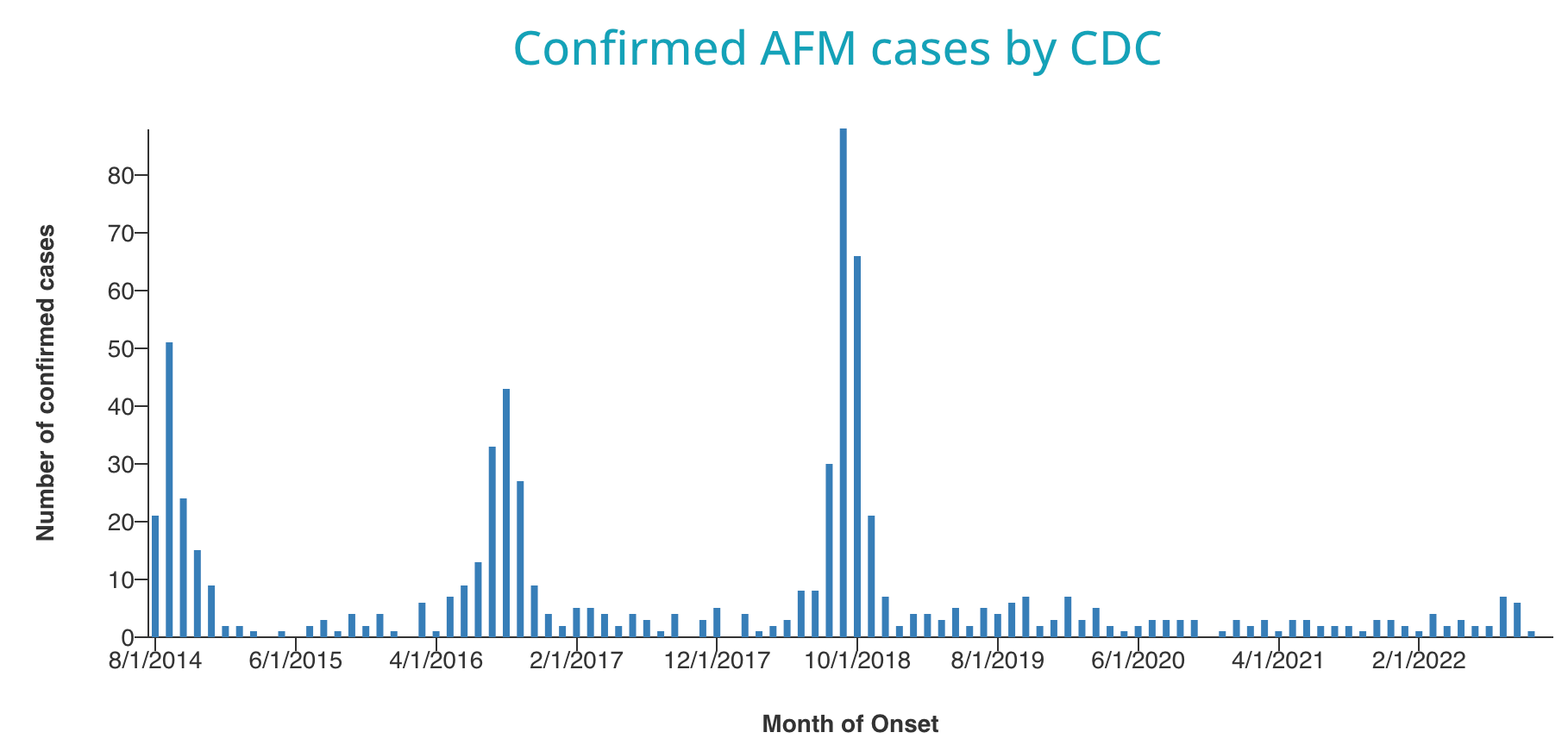
Source.