


Starting October 2nd, paying subscribers will receive exclusive access to regional editions of "This Week in Outbreaks." Just like my weekly national updates, these specialized editions will provide in-depth information on respiratory diseases including Covid-19, influenza-like illnesses, and RSV. I will also cover stomach bugs and food recalls. What sets this apart? The data you receive will be tailored to your region so you can be informed about what's happening in your area. To learn more, see my recent announcement:
 Caitlin Rivers
Respiratory diseases
Influenza-like illness
Influenza-like illness (ILI) activity remained stable at the national level this week. The percentage of visits to the doctor that were for fever and either cough or sore throat remained at 2%, below the threshold of 2.5% that can mark the beginning of flu season but above summer lows.
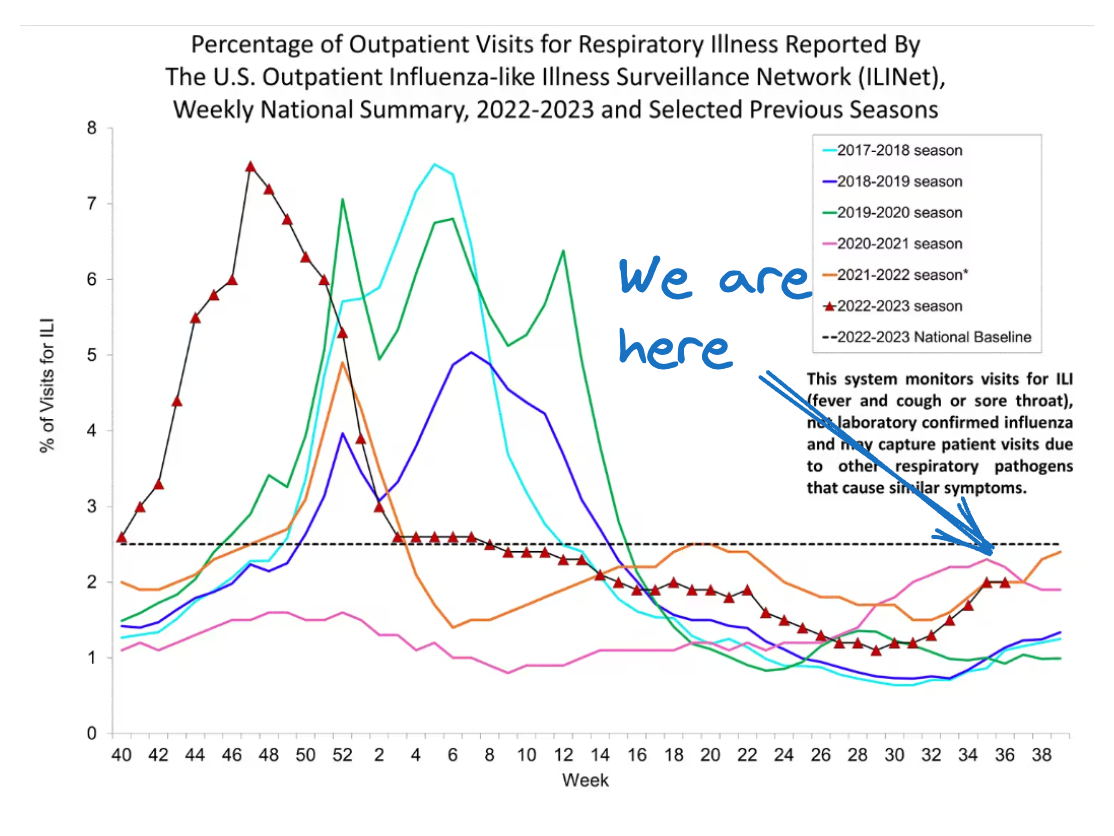
But that’s not the whole story. ILI activity rose in children ages 0-4, from 6.2% to 6.5%. The little ones are getting hit hard yet again. But current activity is still far below winter highs. For comparison, during the height of flu season last winter, rates in young children reached nearly 16%. Older age groups are better off right now. People ages 5-24 had the second highest ILI rates last week, at 3.1%. Older age groups remained between 1-2%.
This pattern is similar to what we saw last year during the tripledemic, when young children were hit especially hard. I wrote on Twitter last week that our school district is scolding parents about attendance, after a large jump in chronic absenteeism last year. Chronic absenteeism is equivalent to missing two days per month. I’m convinced it’s not a lack of commitment to education, but rather sick days that has been keeping kids home.
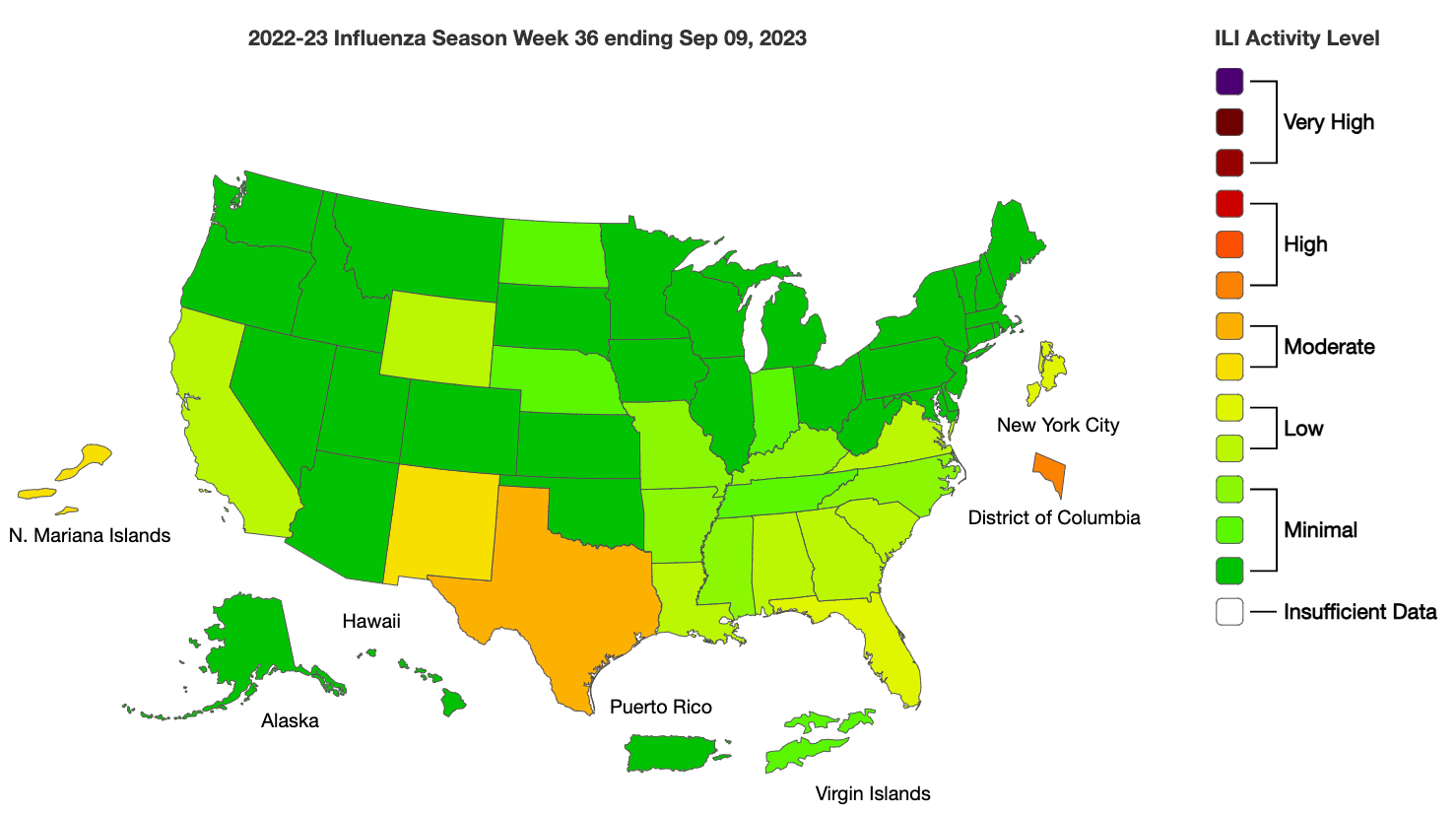
In terms of geography, the Southern region continues to be disproportionately affected by current ILI activity. In fact, Washington D.C. is now in the high category, and Texas rates as moderate. We usually don’t see levels above mild until later in the season.
Overall rates are still low, I’m just updating you on the latest. Most of the country remains in the minimal or mild categories, and activity remains below baseline nationwide.
As an aside, it is interesting to me that the summer Covid-19 wave, early RSV activity, and now ILI are all beginning in the South. Some may be mixed signals—Covid-19 can sometimes be picked up by ILI, because it can cause fever and cough—but I do wonder what, epidemiologically, is causing the pattern.
Covid-19
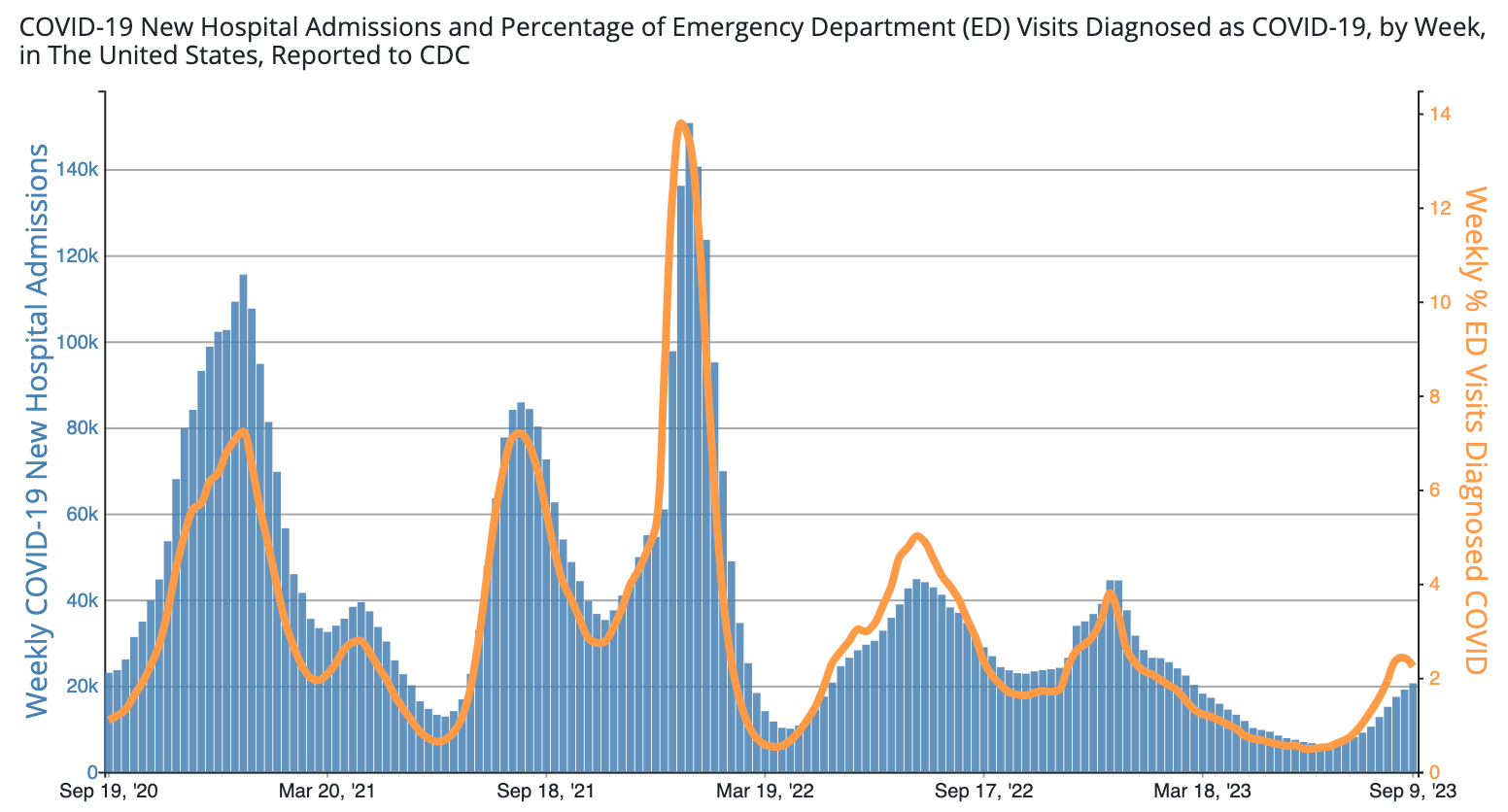
I’m still hopeful that the summer wave is peaking. My guess is that the South has peaked, and the other three regions are 1-3 weeks behind.
Hospitalizations rose again during the last reporting period, but only by less than 8%, down from 9% last week and 16% the week before. Related indicators like Emergency Department visits and test positivity are also showing signs of improvement, particularly in the South. Wastewater concentration also fell again the Southern region and has leveled off in the other three regions.
As a reminder, the updated vaccine is out now.
RSV
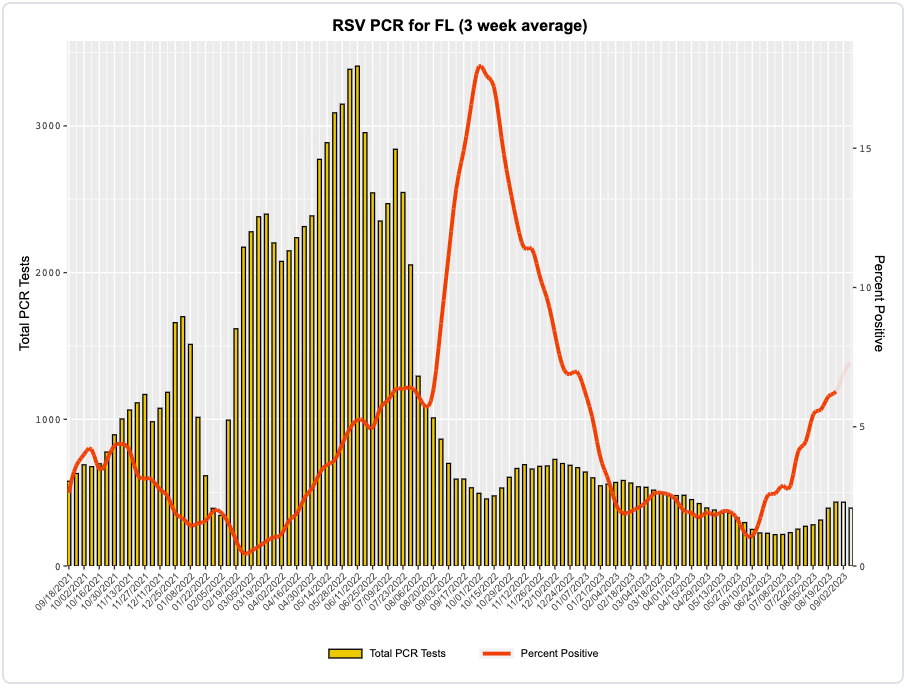
RSV cases are increasing, particularly in the South. In Florida, currently around 8% of PCR tests show positive results for RSV, a jump from 2% in June. During peak winter, this figure can climb over 15%. While RSV test positivity is also going up in other Southern states, as well as in New England and the West, the activity remains comparatively lower. Overall, I would say that activity is moderate in the South Atlantic region and low but heading in the wrong direction in the other regions I mentioned.
As a reminder, new shots are available for infants and older adults.
Stomach bugs
Norovirus activity is rising in the Midwestern region of the country, though wastewater concentration remains fairly low compared to last winter’s highs. I’ll be keeping an eye on it in the weeks to come. Activity in the other three regions may also be rising, but the data are less clear.
For new readers, more on preventing norovirus: The biggest concern with norovirus is preventing dehydration. This is especially important in children and older adults, who dehydrate quickly. I keep electrolyte packets (like powdered Pedialyte) in the pantry, because they take up less space and have a longer shelf life than bottles of liquid rehydration products. Water, broth, popsicles, diluted juice, sports drinks, etc. are also good options. Don’t fall behind by waiting until dehydration sets in. Encourage frequent sips from the onset of illness.
Norovirus spreads very easily between people through the “fecal-oral” route. To stop it from spreading, wash your hands thoroughly after using the bathroom and before eating or preparing food. I also use hand sanitizer while I’m in public like after I use self-checkout at the grocery store or when I use public transportation, but you should know that hand sanitizer is not as effective against norovirus as hand washing. Be sure to wash your hands properly when you get home. Most importantly, stay home if you have vomiting or diarrhea.
Food recalls
The following foods are being recalled because they are contaminated. Please check your cupboards and throw out any of these items:
New:
- None of note
Previously reported:
- Hillshire Brands smoked sausage (more info)
- Banquet Chicken Strips Meal (more info)
- Frozen corn and mixed vegetables from Food Lion and Kroger (more info)
- Dehumidifiers, dozens of models sold by major retailers, including Home Depot, Lowe’s, and Walmart. The recalled units were manufactured between 2011 and 2014 (more info — check this list carefully, it’s extensive)
- If you have food allergies, you may wish to review these FDA safety alerts and USDA alerts for foods with undeclared allergens.
In other news
- Free at-home covid tests are back! Beginning Monday, Sept 25, you can order up to four tests per household at no cost to you. The Washington Post has the details, and covidtests.gov is where you can order when the site opens next week.
- Syphilis, a sexually transmitted infection, is on the rise in Japan, likely setting a new (modern) record for the country's infection rates this year. This news item caught my eye because the United States is seeing a similar surge. People at highest risk for syphilis include those with multiple sexual partners and men who have sex with men. Congenital syphilis is also spiking, which occurs when a pregnant person with syphilis passes the infection to their unborn child, leading to severe health problems or even death for the baby. Regular screening and prompt treatment are essential. You can take the first step by finding a clinic here.
- I’m excited to share that my team (in my day job as a professor at Johns Hopkins) has been awarded substantial funding from the Center for Forecasting and Outbreak Analytics at CDC to join a new network of centers focused on using infectious disease modeling and analytics to support epidemic preparedness. We can’t wait to get started!
