
Updated flu report, national edition
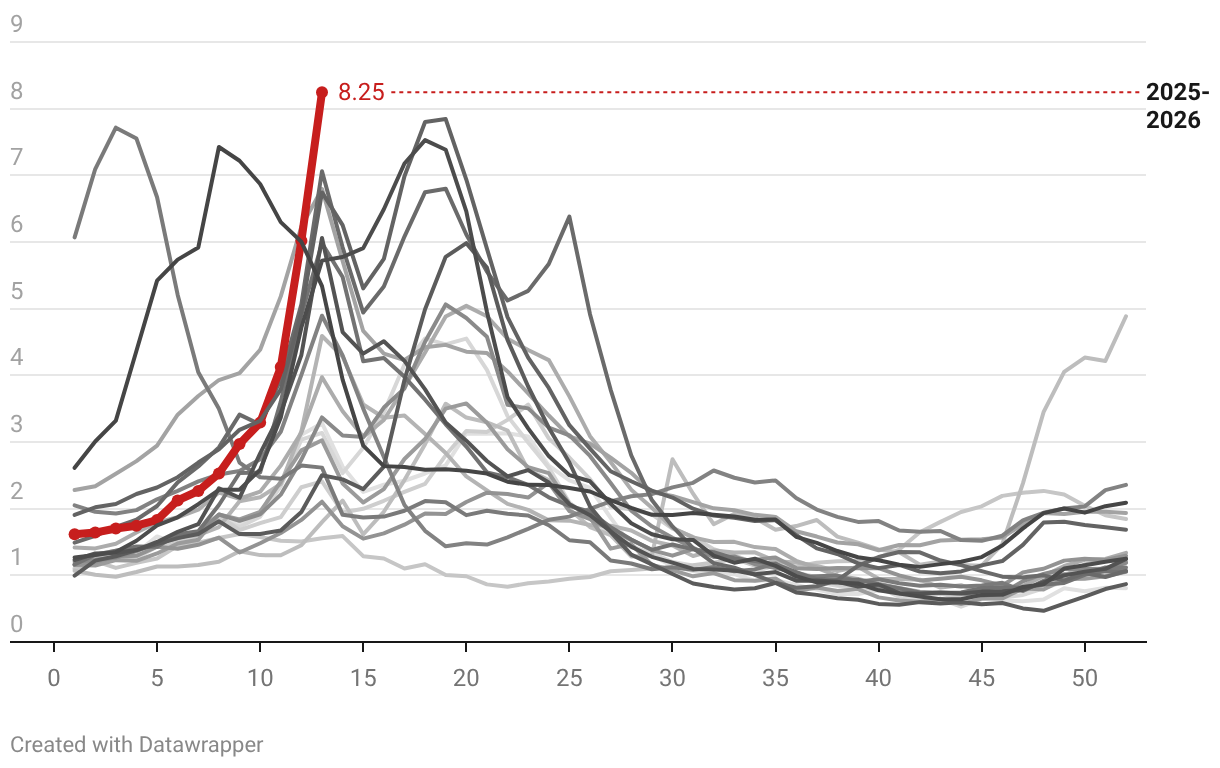
Today’s report: Over the weekend, I sent out a report with the latest updates on this season’s big flu season. At the time, the full dataset I use was unavailable due to the New Year's holiday, so I compiled a preliminary analysis based on data from selected states. Now that the complete dataset has been released, I wanted to send out an updated report with additional details. Note that this report covers data through the week ending December 27.
Summary: Flu season is in full swing, with outpatient influenza-like illness (ILI) reaching highs not seen in more than two decades. Around 8.3% of visits to the doctor were for fever and cough or sore throat during the last week of the year.
This season is driven by a new variant of influenza A, called H3N2 subclade K. Luckily, early estimates from the UK find that this year’s flu vaccine still provides moderate protection, with 30-40% protection from hospitalization in adults.
Ages: Children are, as usual, experiencing the highest levels of activity. Nearly 20%, or 1 in 5, visits to the doctor were for flu symptoms in kids 0-4. School age kids aren’t far behind at 15%. However, there is rising activity across the board. These patterns are also reflected in visits to the ED, which are highest in children. However, it is older adults 65+ who have the highest rate of hospitalization by far.
Regions: Every area of the country is seeing high and rising levels of activity. The Northeast and the South are tied, with the West in best shape.
When will activity peak? I think we are right around peak season in many parts of the country. New York City, which was hit early, showed some declines this week. Also, the Center for Forecasting and Outbreak Analytics estimates that most states, particularly in the Southern region, are past peak.
More data: Many of you messaged me over the weekend to ask about specific states. I share updates about all 50 states in the regional editions, which are available to paid subscribers. Today’s regions will go out in about half an hour, and you can always access previous editions via the Newsletters tab.
Get detailed, state-specific public health updates with regional editions—available to paid subscribers. Stay informed where it matters most to you!