

Become a paid subscriber to receive regional editions. The regional editions cover state level information for flu, Covid-19, RSV and more. Try them free for 7 days, then get any or all four regions every week through the winter for $5 a month or $60 a year. Cancel online anytime. Learn more about regional editions.
Influenza-like illness
Influenza activity continues to rise across the country, taking us deeper into a very early season.
Outpatient influenza-like illness increased from 2.2% to 2.4%, which is still below the threshold that represents one way to mark the start of flu season. The West is in the lead, with outpatient ILI of 3% and still rising.
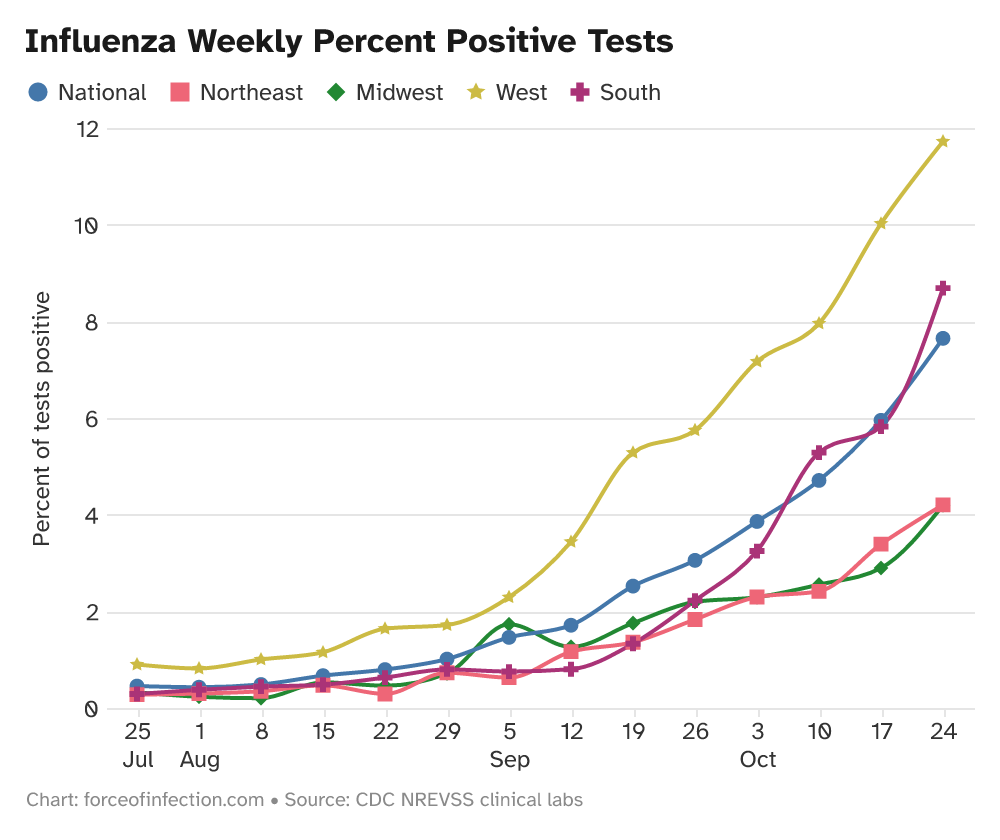
However, these relatively modest outpatient ILI numbers don't tell the full story. Test positivity, which can be an early indicator, is quite high and rising in the South and West. Current test positivity is 8.7% and 11.7%, respectively, compared to around 1% during the same week last year.
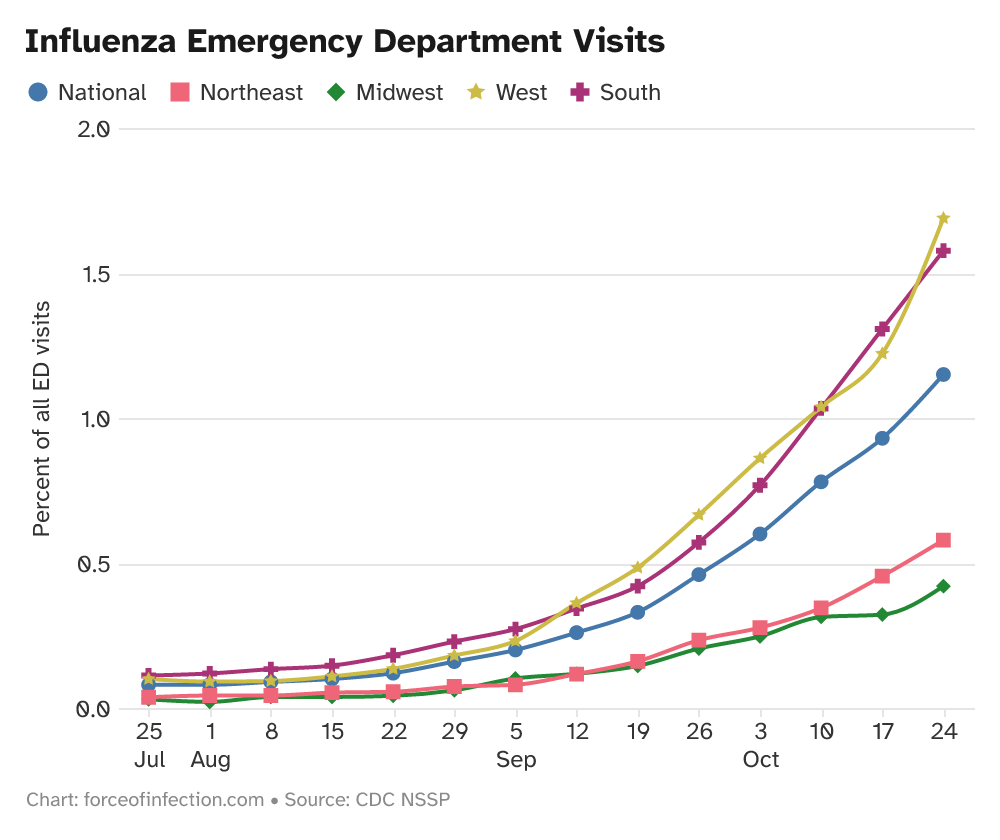
Indicators of more severe illness are rising as well. Emergency department visits for influenza have been rising for over two months now. Again, the South and West are in the lead, both at around 1.6%. During the same week last year, emergency department visits were 0.2%-0.4%. Big difference. Hospitalizations are up, too, particularly in adults over the age of 75.
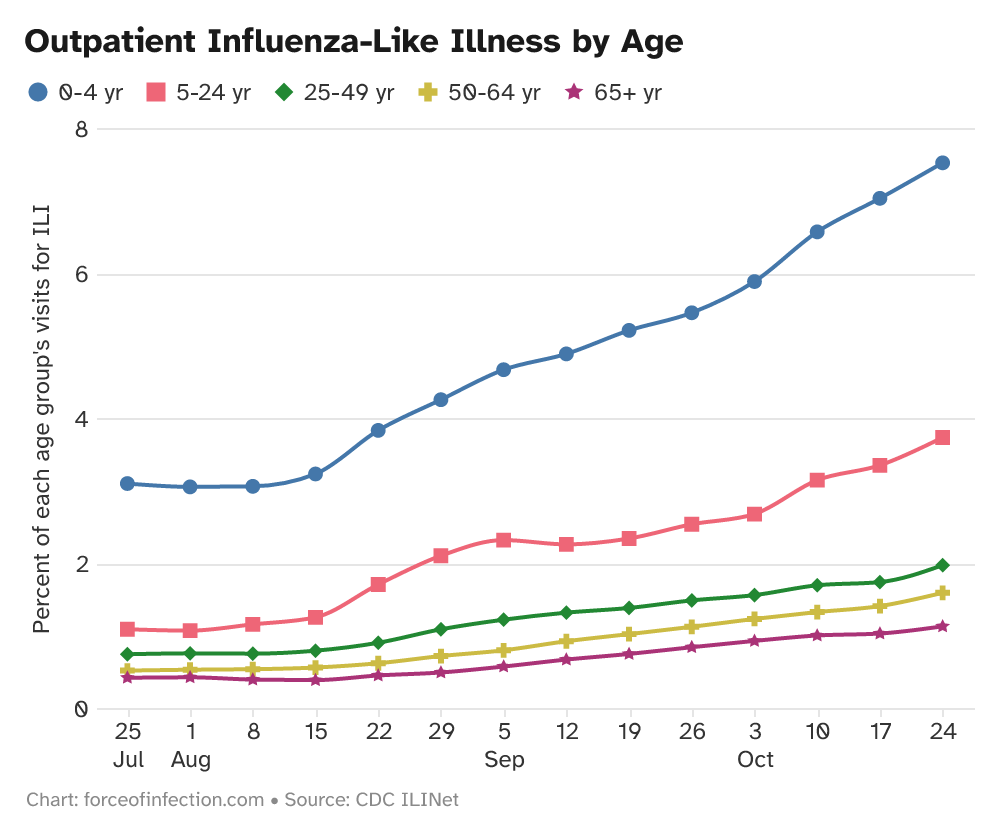
As always, activity is highest in children ages 0 to 4, with outpatient ILI at 7.5%, up from 7.0% the week prior. People ages 5 to 24 are also seeing rapid increases, now at 3.7%. Older age groups are all at or below 2.0%.
In related news, CDC has reported its first vaccine match data of the season. In lab tests, 94% of H1N1 viruses and all H3N2 and B/Victoria viruses tested were well recognized by antibodies to this season's vaccine strains. As a reminder, we are seeing H1N1 circulate right now, so the good match is hopeful. It's early in the season yet so not definitive, but a useful early sign.
COVID-19
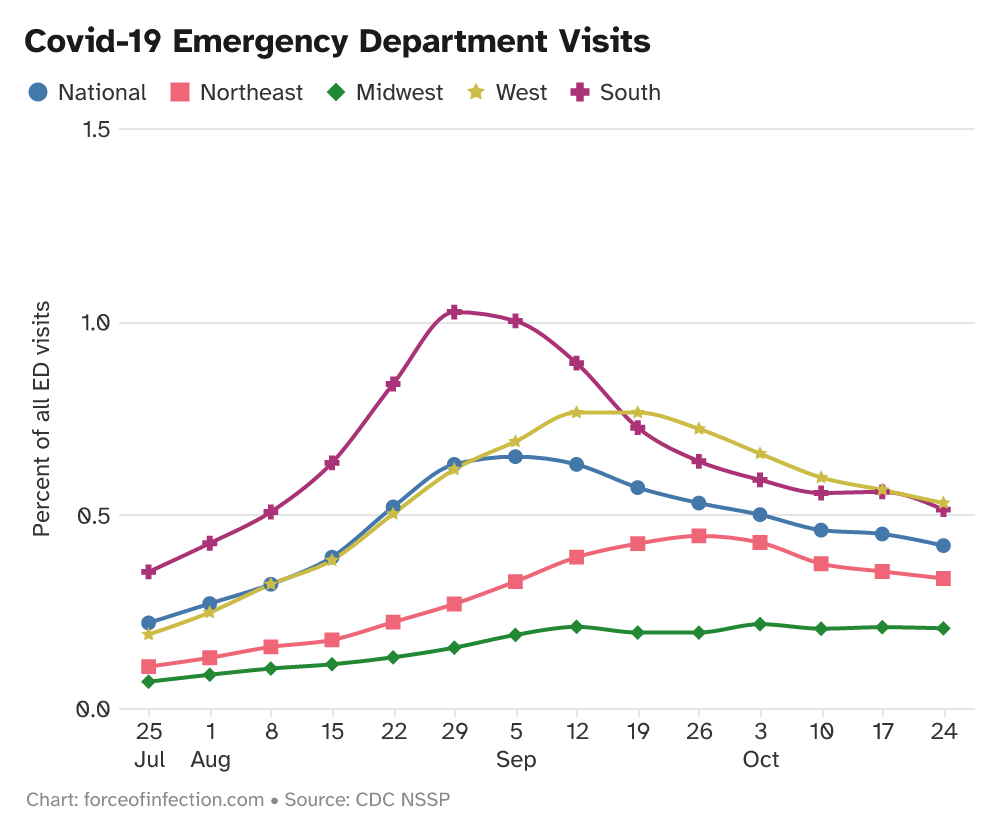
Covid-19 activity remains pretty stable around the country. Emergency department visits have been stable or declining since Labor Day, and emergency department visits are down as well. Wastewater concentration has been a little more variable. The Northeast registered a jump recently, so I'll keep an eye on that.
RSV
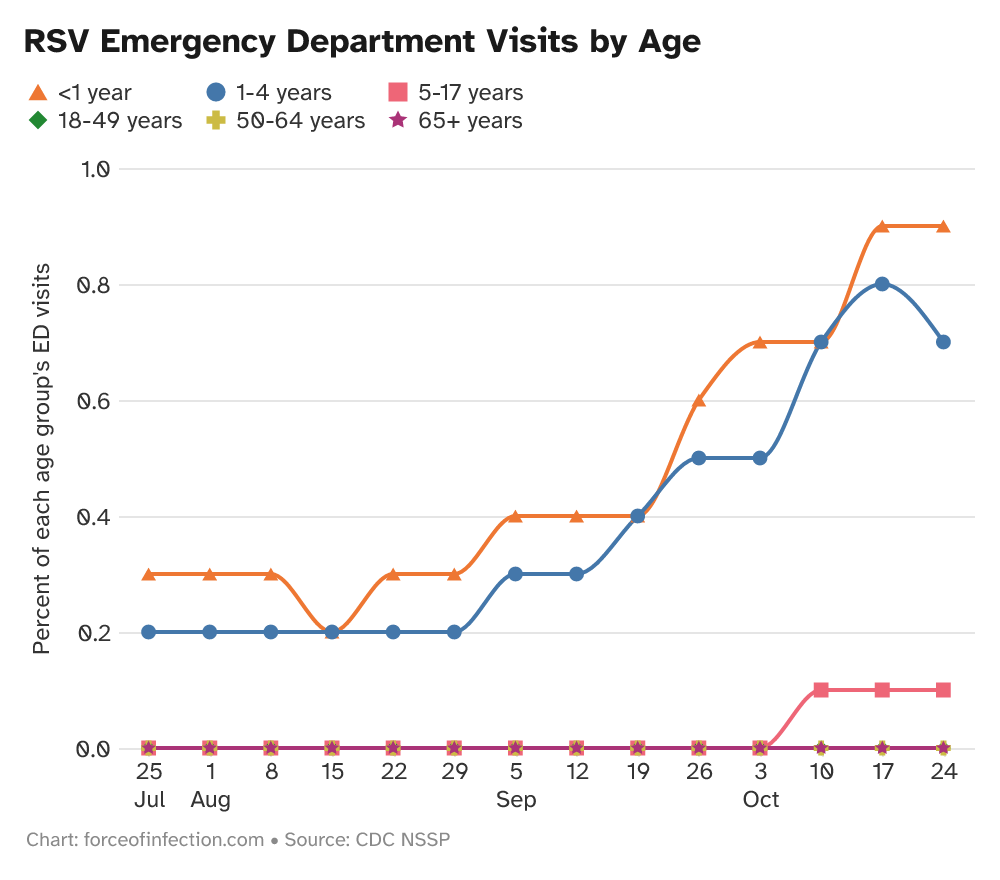
Unlike flu, RSV is right on schedule. Hospital admissions have risen for seven straight weeks, but overall activity remains low and is about the same level as this time last year. The South is most affected, particularly Florida. RSV accounts for 0.9% of ED visits among infants under 1 and 0.7% among children ages 1 to 4.
Stomach Bugs
I have decided to move stomach bugs to a monthly reporting schedule. I have been unhappy with the quality of the weekly data. It's often delayed, and the numbers can change quite a bit retrospectively once new data come in. A monthly look will give a more reliable picture.
Food Recalls
New:
- Cold Smoked Sprats from Haifa Smoked Fish (more info)
Previously Reported:
- Coffee & Vanilla Gelato from Gelatelli (Lidl US) (more info)
- Hot Dogs, Bacon, Sausage and Deli Meats from Kayem Foods (more info)
- Raw Oysters from Little Wicomico Oyster Company (more info)
In Other News
- The Ebola outbreak in the Democratic Republic of Congo (DRC) has passed 10,000 confirmed cases, with about 5,000 deaths, according to CDC. That makes it the second-largest Ebola outbreak on record, after the 2014-2016 outbreak in West Africa. This month, two additional countries have been affected. Kenya has confirmed nine cases and two deaths, with no new cases since October 20. Nigeria's one confirmed patient was evacuated to Switzerland, and their contacts are being followed.
- No cases have been reported in the United States. However, starting after November 3, all passengers on international flights to the US (regardless of the flight's origin) must attest that they haven't been in the DRC in the past 21 days.
- There's a new study in a peer reviewed journal with good news about the new RSV products on the market. The study followed more than 15,000 full-term infants at Kaiser Permanente Northern California over two seasons. Some of their mothers got the RSV vaccine during pregnancy (Abrysvo), and other infants got the antibody shot nirsevimab (Beyfortus). Compared with infants who had no protection, the maternal vaccine was associated with about 86% less RSV hospitalization and the antibody with about 74% less. The difference between the two wasn't statistically significant. The authors say the findings support current guidance that families can use either product.
Regional editions FAQ
- The third set of regional editions of the season went out to paid subscribers earlier today. Regional editions contain detailed, state-level information about flu, Covid-19, RSV and more.
- If you would like to receive regional editions for $5/mo, follow these instructions. You can cancel online any time.
- If you were expecting a regional edition but did not receive it, begin by checking your spam folder. Then, confirm your regional selections using these instructions. If you're stuck, write to support@forceofinfection.com. (Please be courteous! I promise we will do our best to solve your problem.)
- Paid subscribers can view regional editions online anytime at forceofinfection.com. Here are the direct links to today's for easy access: South | West | Northeast | Midwest
Have questions or comments? Reach us at support@forceofinfection.com.